I led the project end-to-end, owning product design direction, user research, branding and product strategy. I worked closely with the PM and engineers, aligning business expectations with design and product strategy.
I co-shaped the economy where Creators, Subscribers and Speculators each got something the others couldn't, designed every flow across the mobile-first PWA, and grounded decisions on user interviews and on-chain signal. I built the brand from scratch and made the calls on what to ship, kill, and defer.
Back in 2024, DEGEN became a thing on Farcaster. Users could tip each other in posts and comments with simple commands, monetising content peer-to-peer without leaving the app. Alongside Frames (mini apps inside social posts), it boosted engagement on the platform and AlfaFrens launched right on that wave.
Who we were building for
Three audiences had to coexist on the same platform without one cannibalising the others. The product mechanics had to make each group earn or get something the others couldn't.
Creators
Content creators who want to earn money through a gated community.
Subscribers
Users who want to digest content from niche creators they trust.
Speculators
People who strategically subscribe and stake tokens to earn yield.
People don't want yet another social app.
Competing head-on with established social platforms was not an option. Countless platforms had promised to decentralise content but never got it right. So how could we get it right? By focusing on one problem we could actually solve: payments and creator incentives.
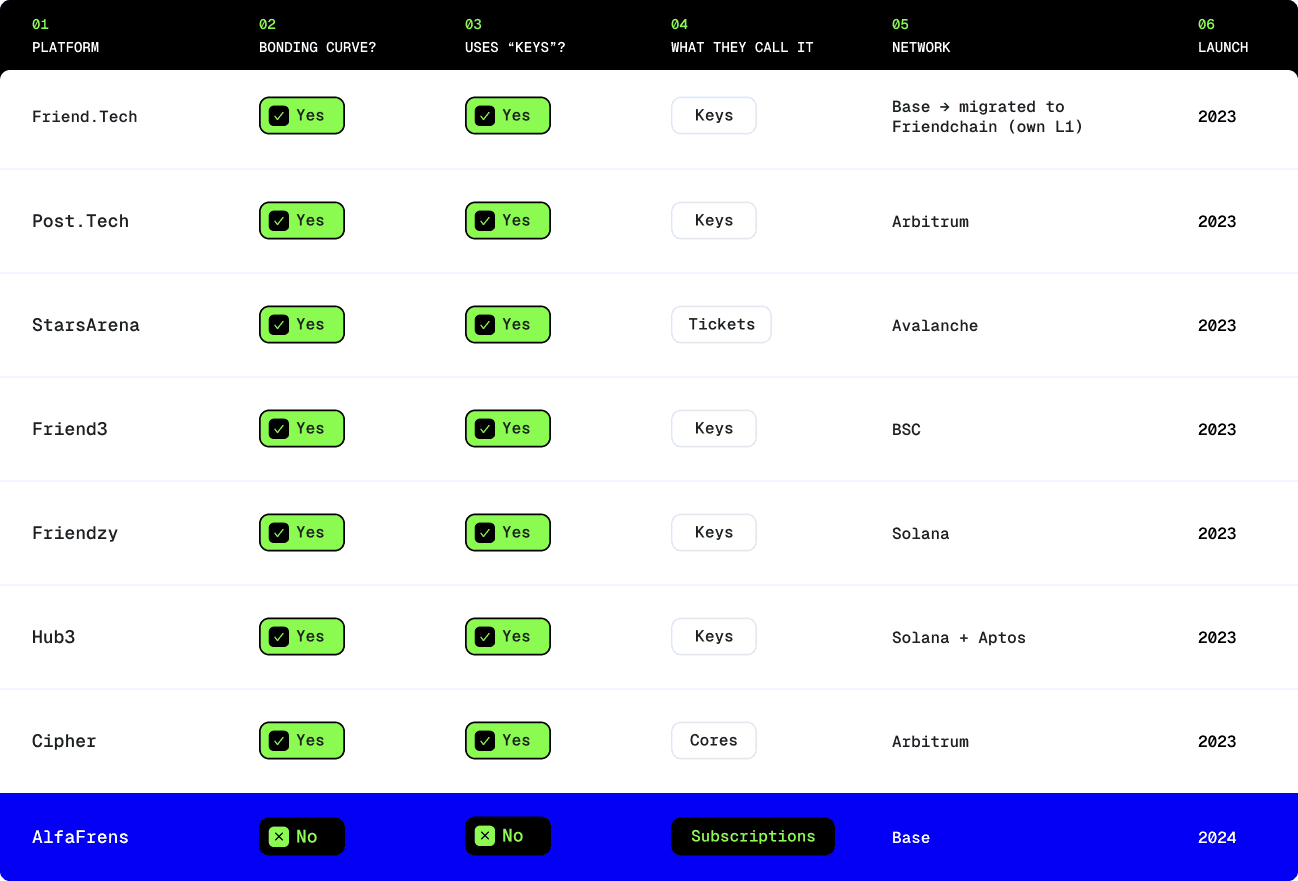
Friend.tech proved it could be done
Friend.tech showed the appetite for monetised social access. But we wanted to lean further toward content and community, rather than focusing on complex pricing curves and speculation mechanics.
Streaming tokens. Pay-per-second subscriptions.
The main objective was an app that incentivises creators for good content and lets subscribers earn on top of getting access to curated chats.
Superfluid's streaming capabilities were ideal: subscribers paid for as long as they wanted to be subscribed, second by second. If a creator went silent or the content got dull, users could unsubscribe immediately, without being locked in for the rest of a month.
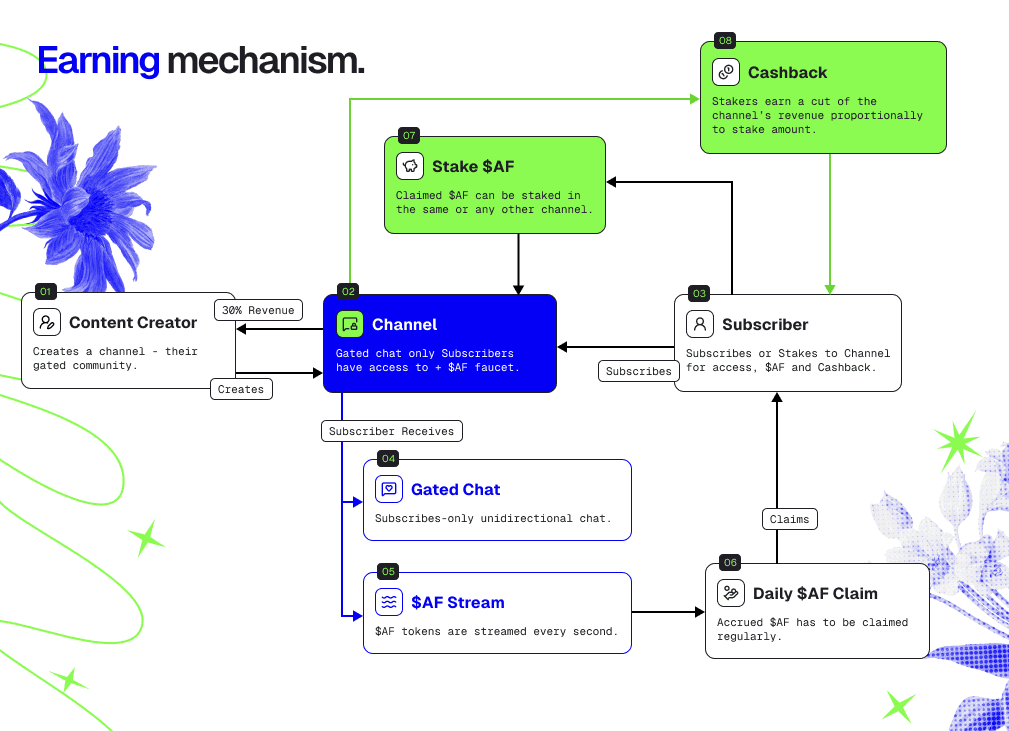
Users could pay gas in DEGEN (later in ETH) thanks to Biconomy's paymaster, exactly how the Farcaster crowd wanted to be onboarded: native to their culture, frictionless to use.
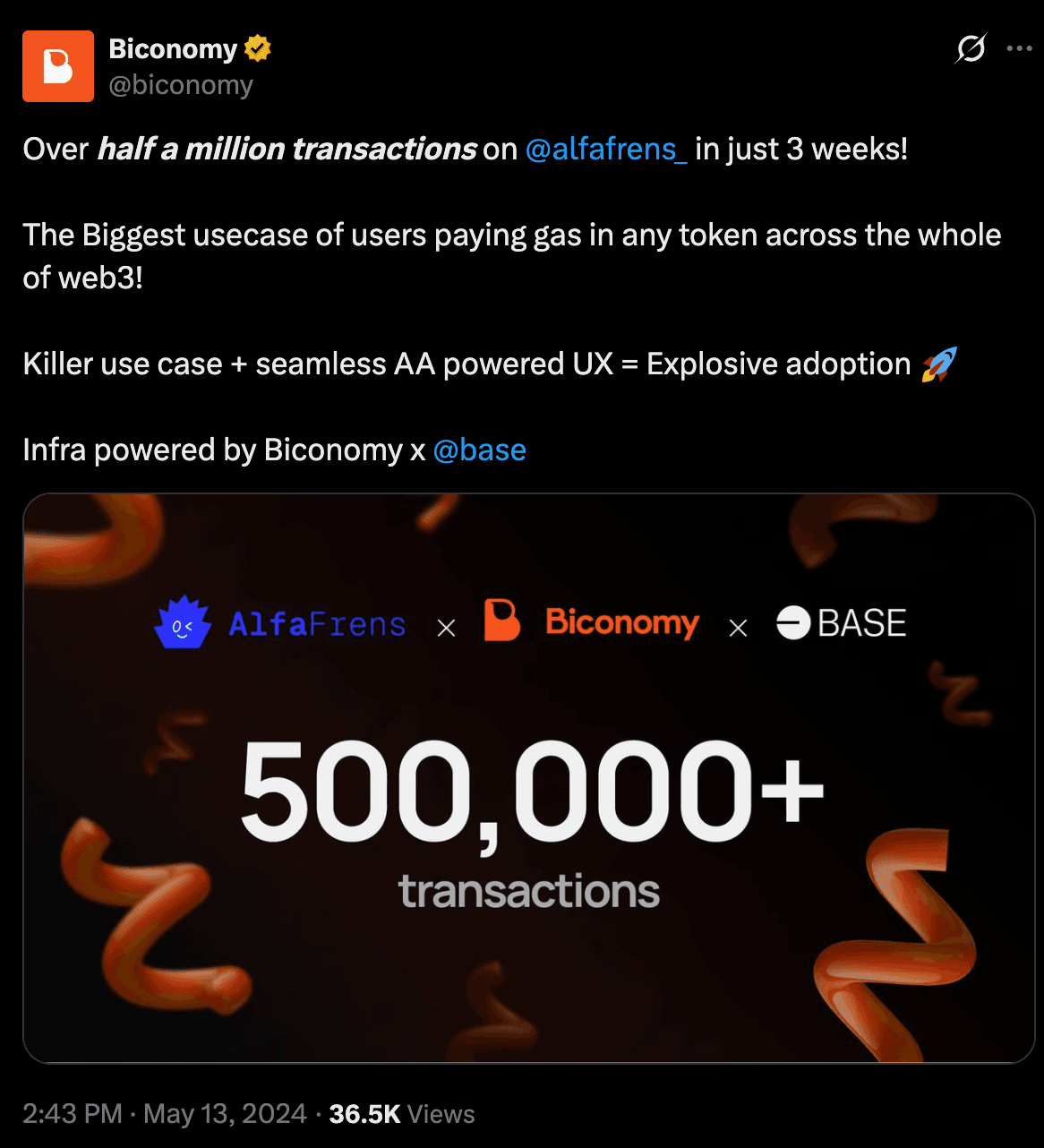
Spend to subscribe. Earn $AF tokens. Stake to earn.
- 01
Log in with Farcaster
Single-tap social login using the user's existing Farcaster identity.
- 02
Subscribe to creators
Pay-per-second stream. Users can cancel anytime, the cost stops the moment they do.
- 03
Get access and earn $AF tokens
Curated channel access plus the ecosystem token as a reward for participation.
- 04
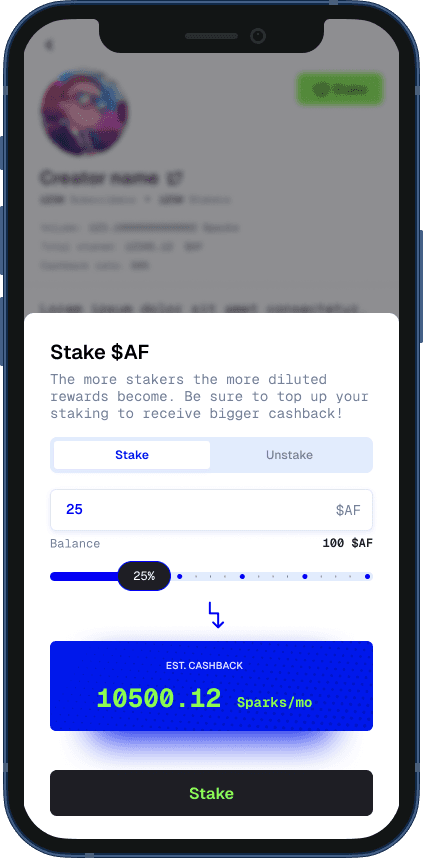
Stake $AF tokens on any channel
Users pick a creator they believe in and back them with their stake.
- 05
Earn cashback
The bigger the user's stake on a popular channel, the bigger their slice of the rewards pie.
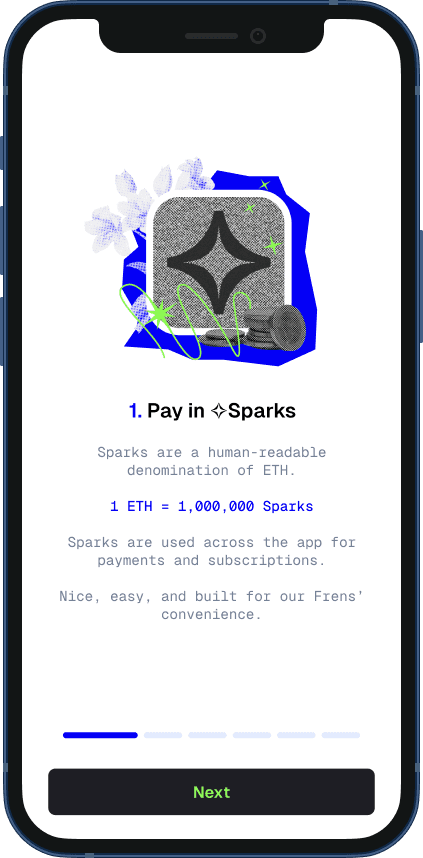
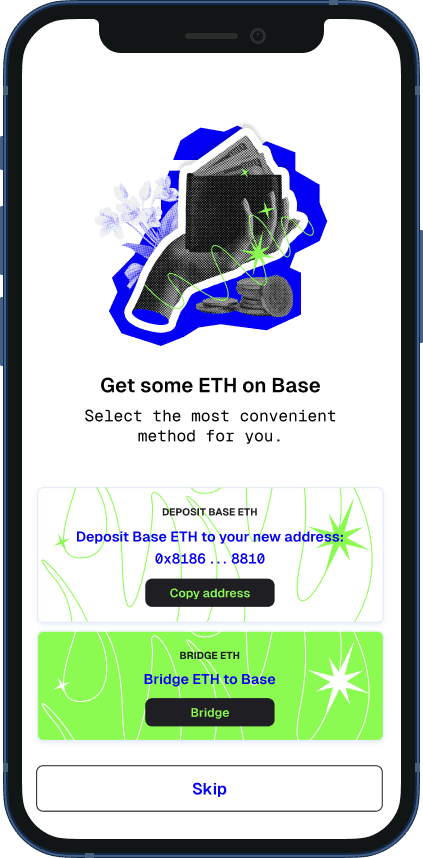
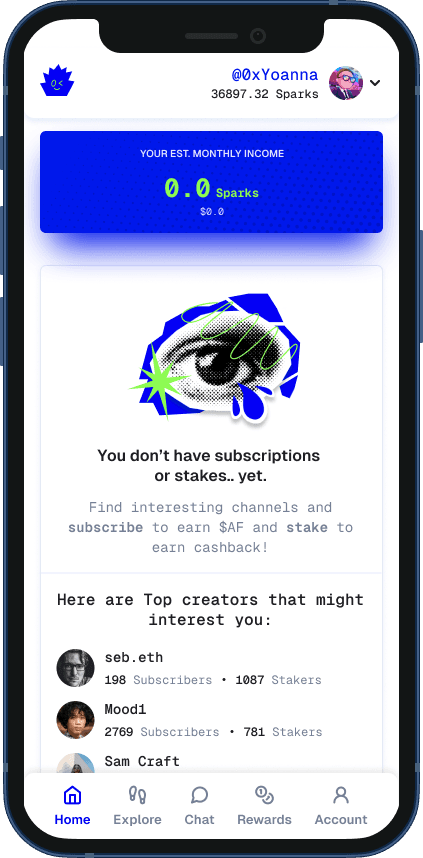
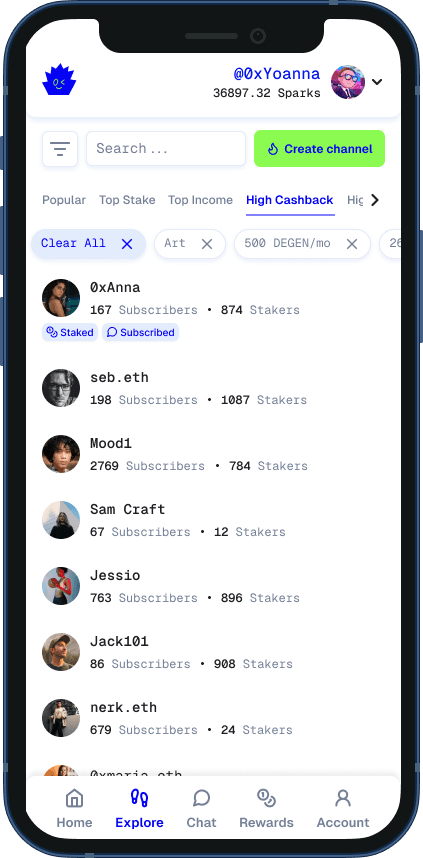
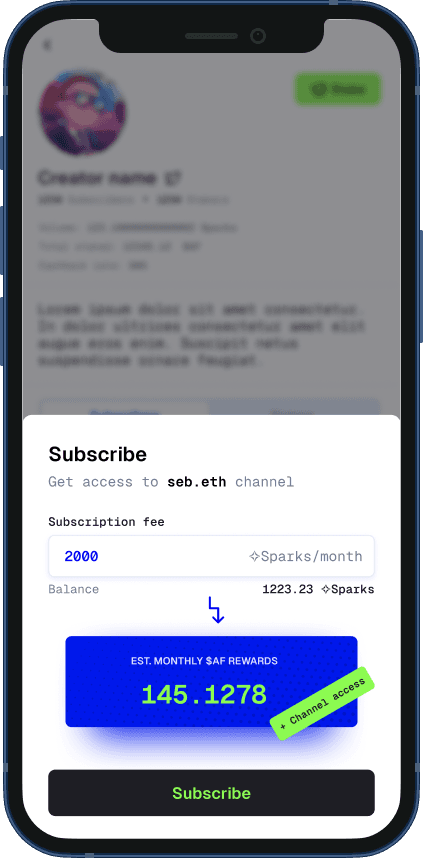
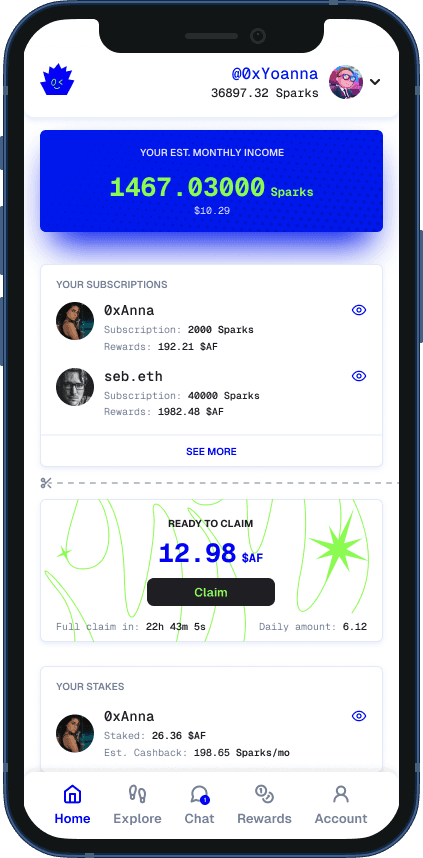
Revenue split
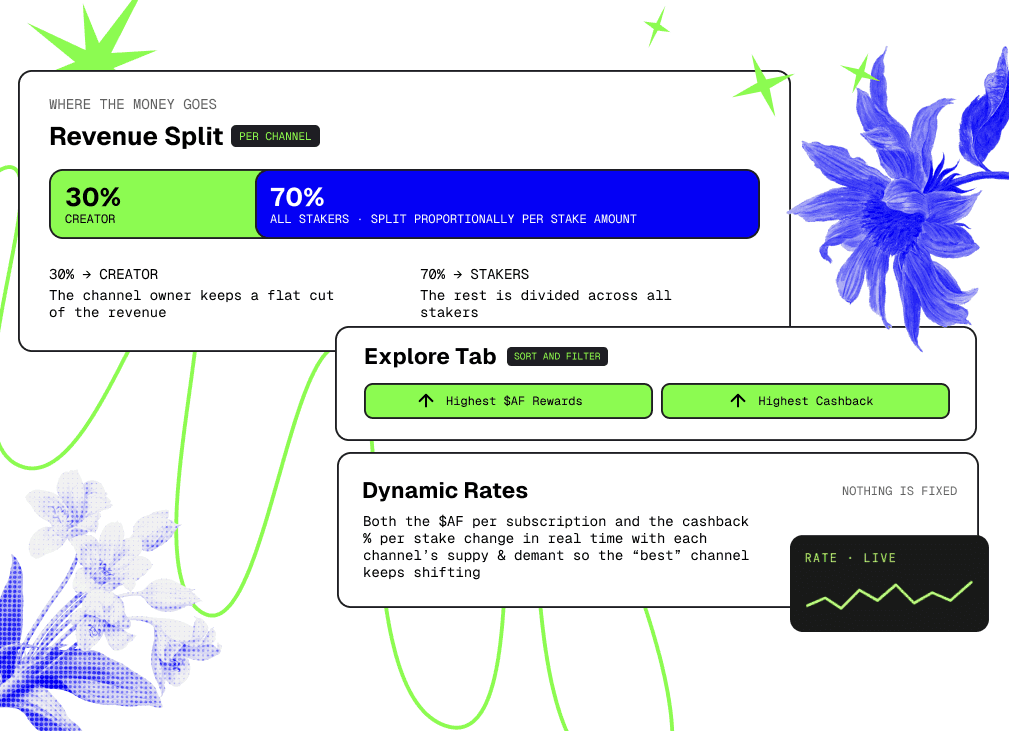
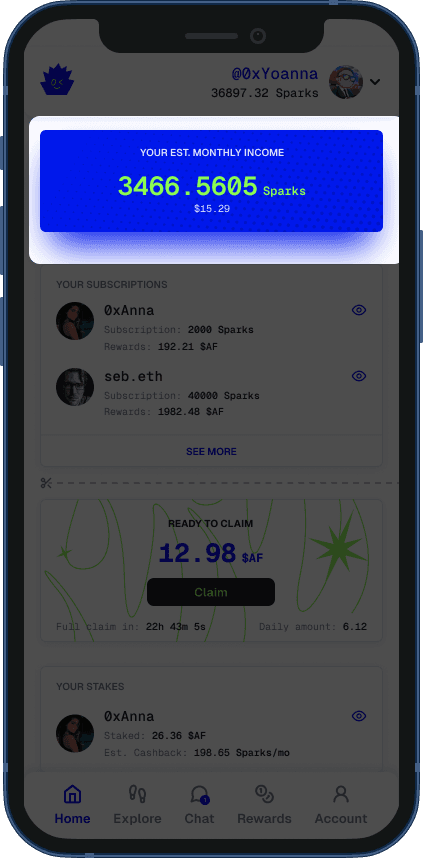
Creators earn 30% of all subscriptions on their channel. Stakers earn the remaining 70%, proportional to their stake. Anyone could launch a channel, not just curated creators.
The aggressive split was deliberate, a core lever to pull subscribers in. We bet crypto-native creators would take 30% upside over a bigger guaranteed cut. They did.
Creators were also subscribers, earning $AF tokens they could stake on other channels for cashback. So 30% understated what they actually walked away with: direct subscription revenue plus a slice of the platform's cashback economy.
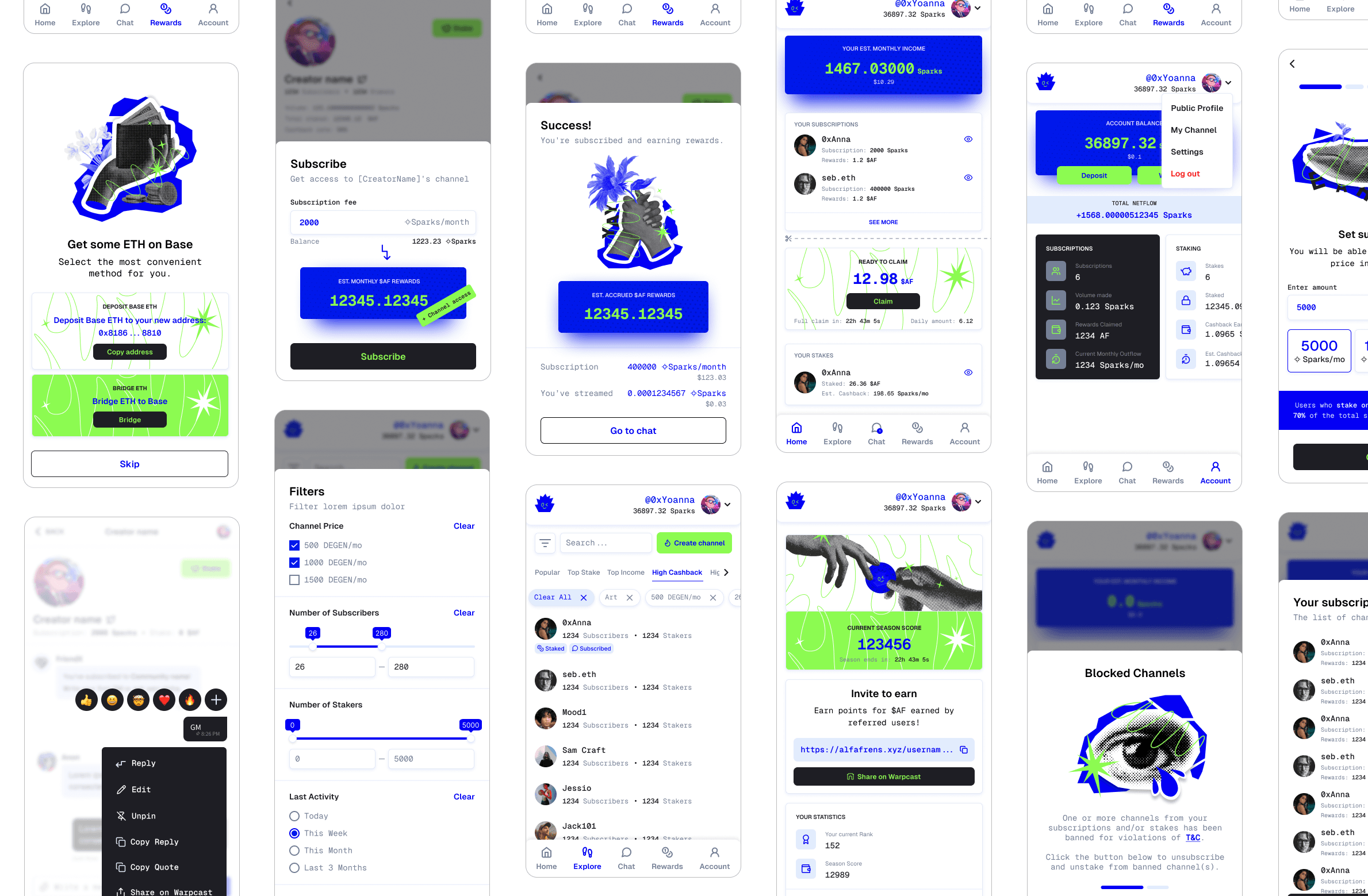
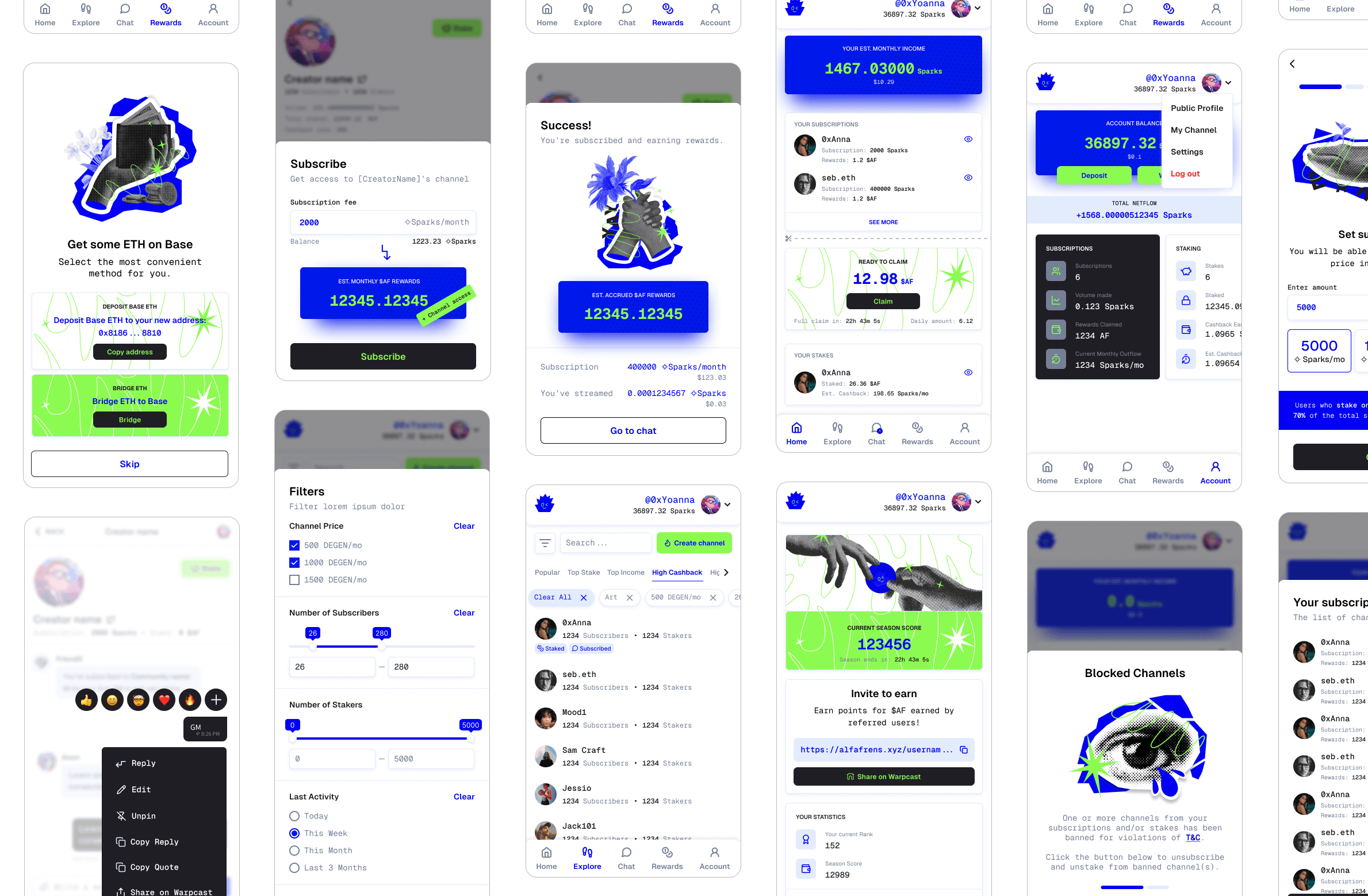
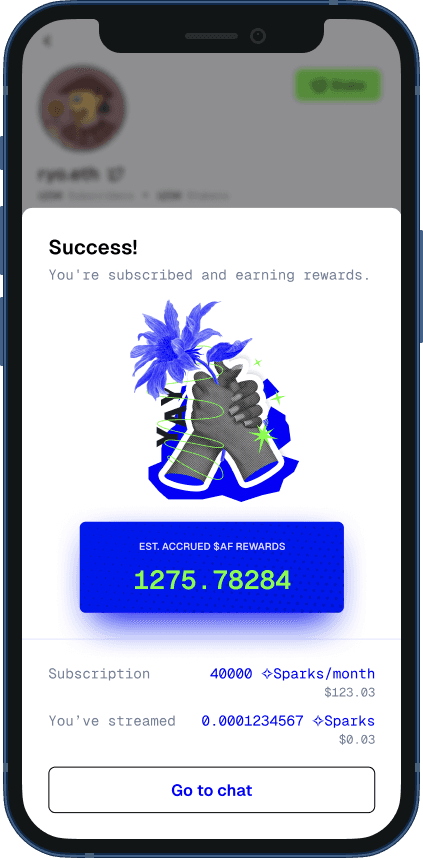
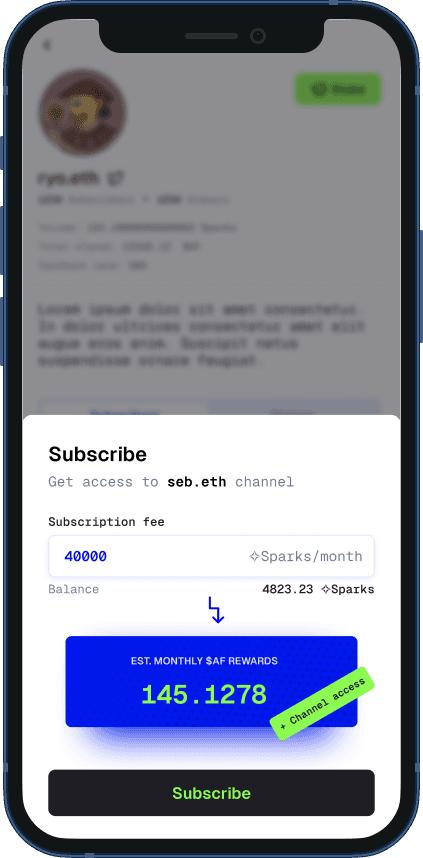
Subscribe to access chat
The subscriber flow. From browsing channels to landing inside a chat the moment the per-second stream starts. The whole flow is built so the user understands they're paying continuously, not in a lump.

Speculate on channel price and $AF rewards
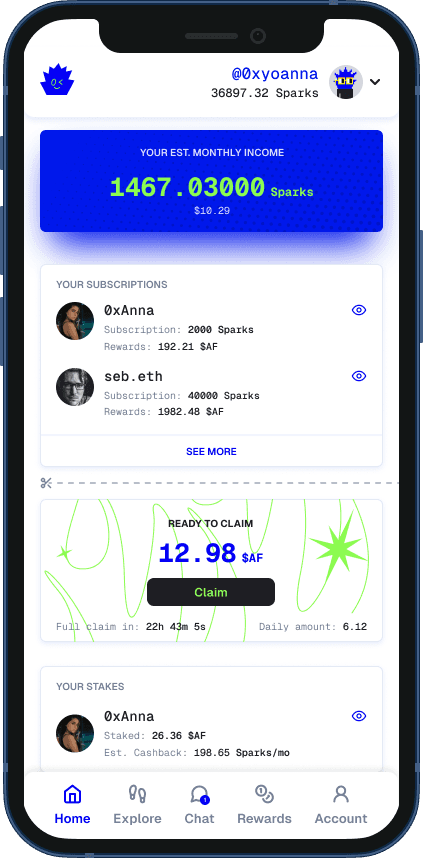
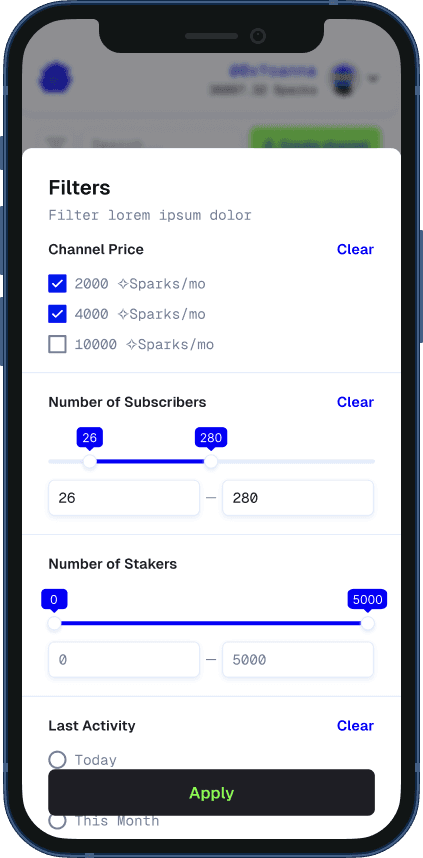
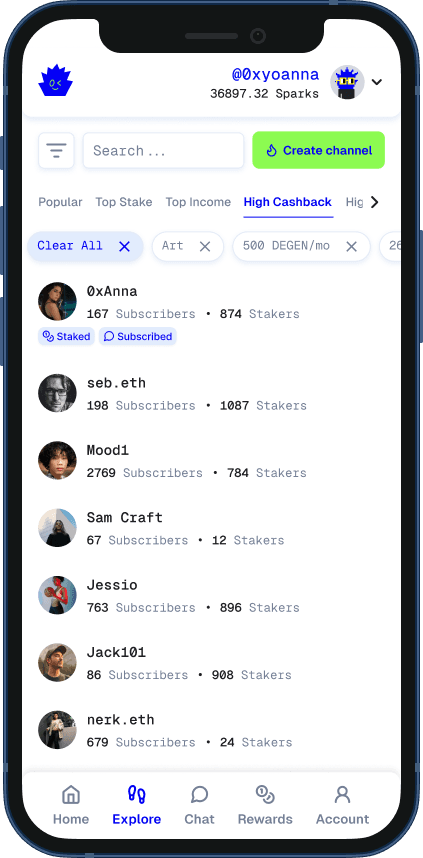
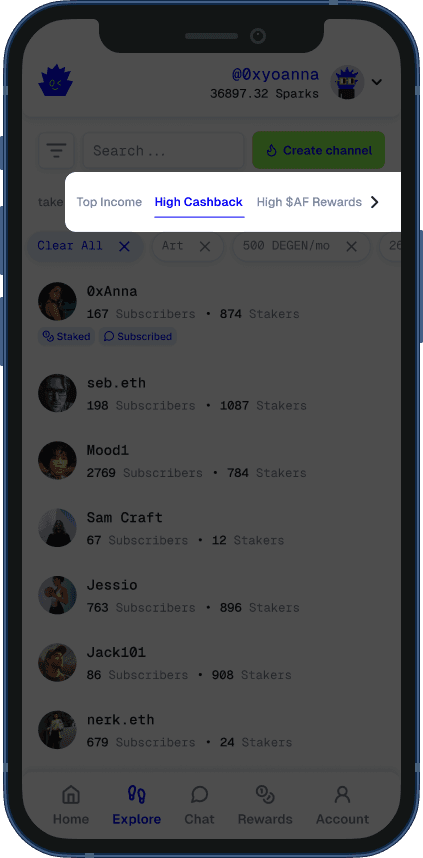
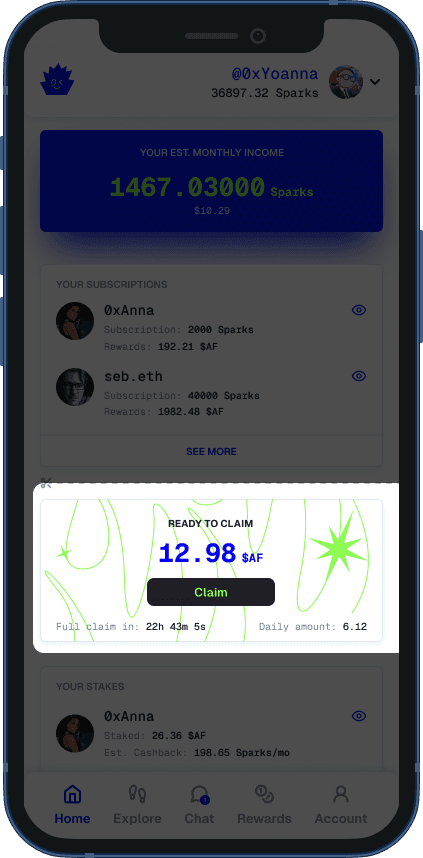
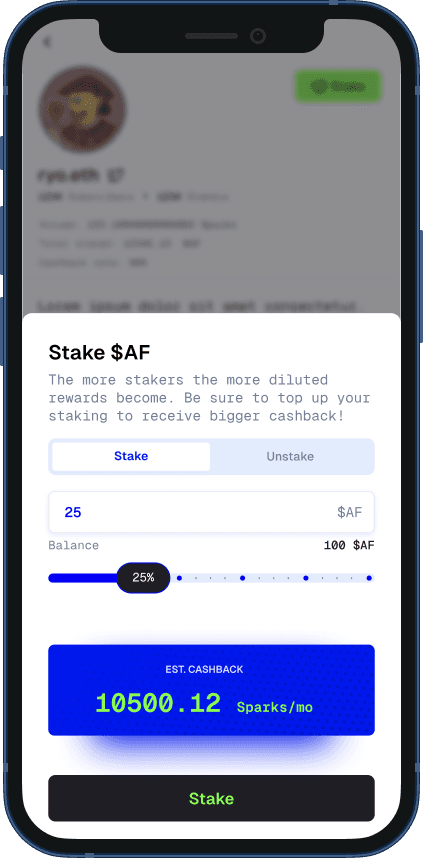
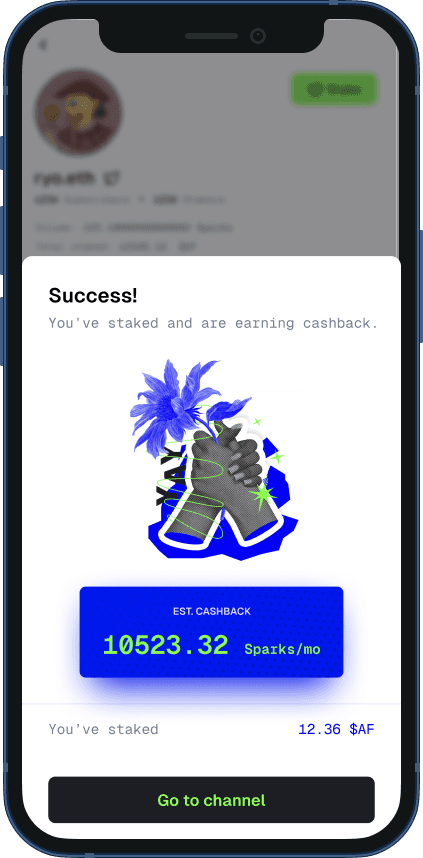
The speculator flow. Their goal: find the cheapest channels paying out the most $AF. I designed the filtering so each could land on their own strategy. Speculators sub and unsub as $AF earnings rise and fall, so the UI made switching easy, otherwise we'd lose them to off-app arbitrage scripts. From there they could stake $AF on channels they backed for a bigger cashback slice from the top earners.
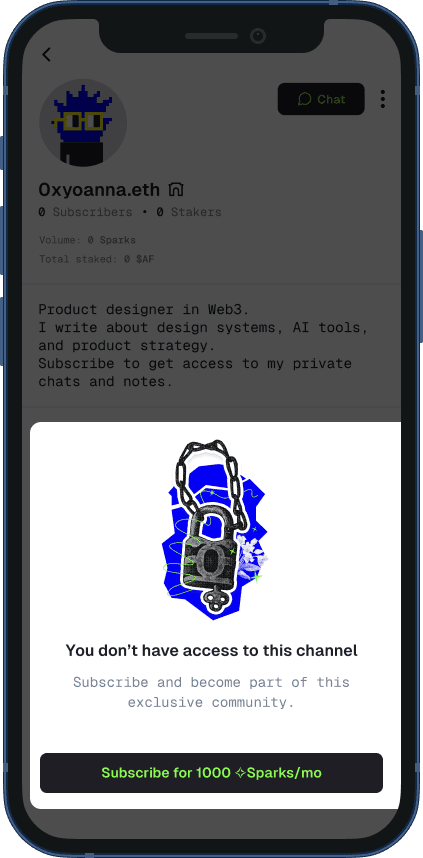
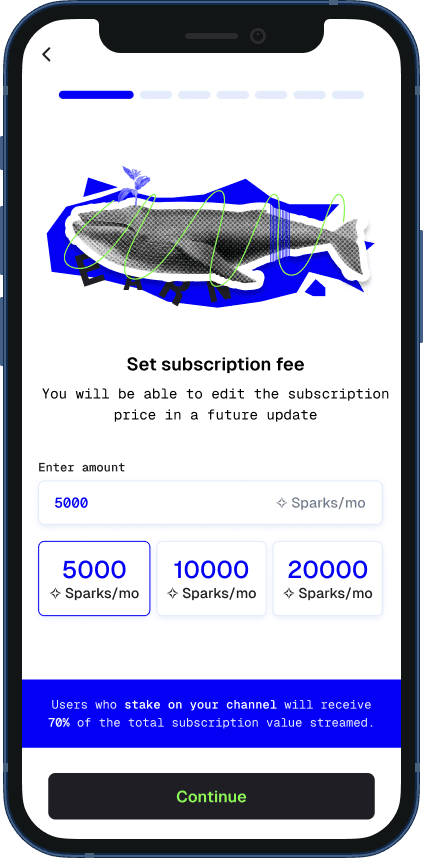
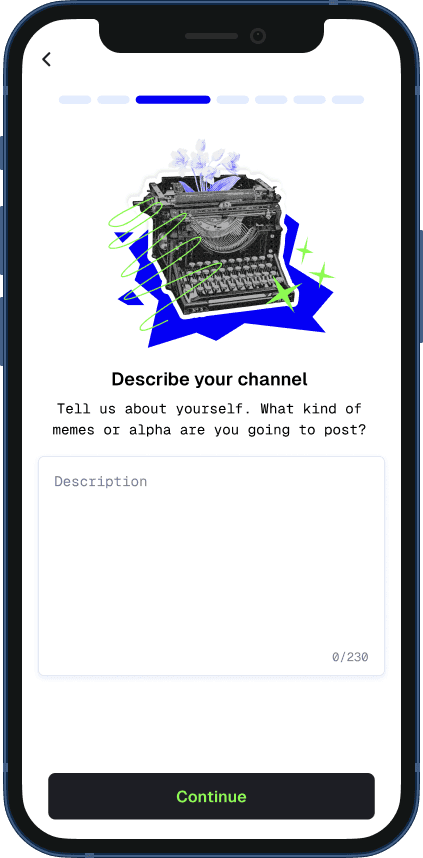
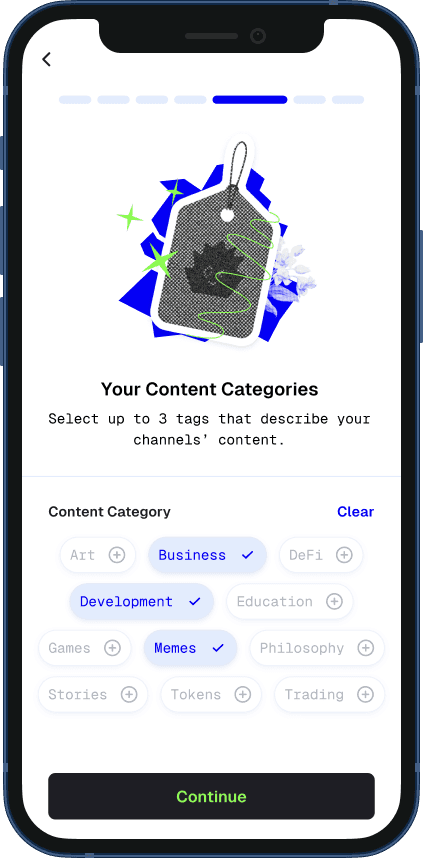
Create content and share with the audience
The content creator flow. Creators launch a channel in a few steps, share the channel link with their community, send messages, and watch the revenue grow in real time. Creators could also participate in staking, so if they wanted a bigger slice of their channel's revenue, they had to fight for cashback alongside the speculators.
Scarcity, vitality, presence.
Timing was everything. The app was ready, the brand was weird, and all hands were on board. To get the hype around AlfaFrens we used freshly-baked Frames to distribute access codes.
We hit huge virality on the platform and everyone was talking about it. On top of that, every user with access could give 5 invites, which made them come up with their own distribution strategy within their friend groups and communities.
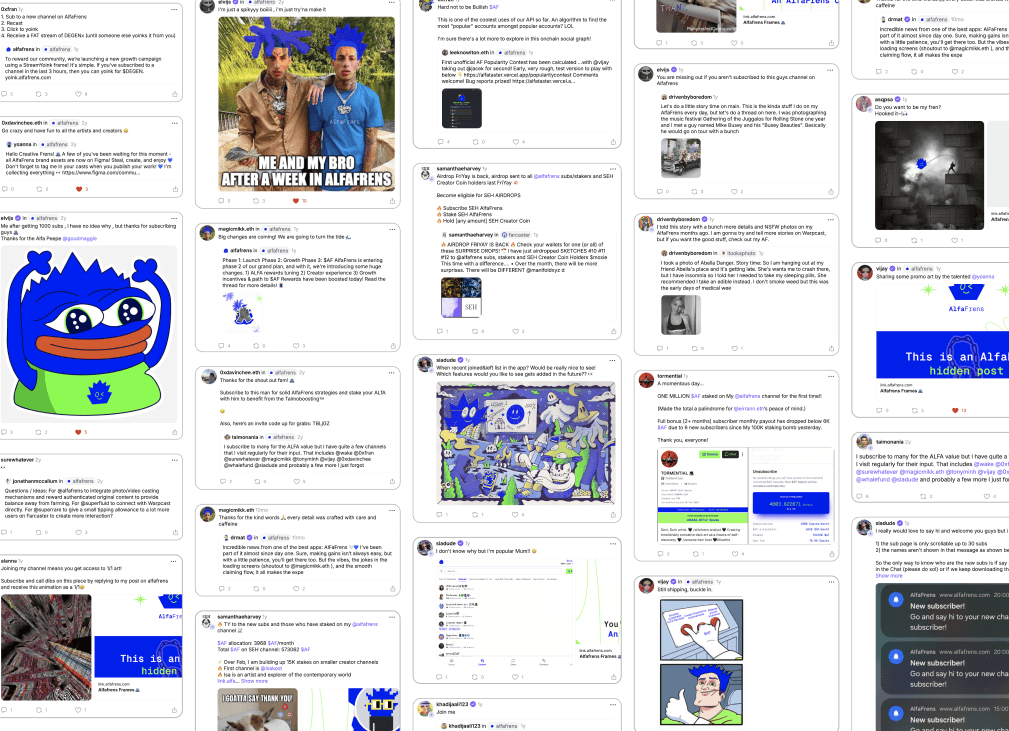
Every team member ran their own channel and engaged with the community directly. Farcaster presence was the priority. The first weeks were everything: we listened to feedback, reacted to FUD, ran fun events (e.g. best NFT contest) where users could win $AF tokens.
It took Farcaster by storm.
Once the hype settled, we shifted from launch mode to listen and refine. I interviewed a dozen early users across the three profiles: Creators, Subscribers, Speculators. Goal: understand how they actually used the app, what they were unknowingly looking for, and where friction lived.
Feedback was extremely positive: users of every background got the basic premise, and they were vocal about what was missing. I cross-checked the interviews against Farcaster signal. They matched closely.
Results
- 01
Unidirectional chat
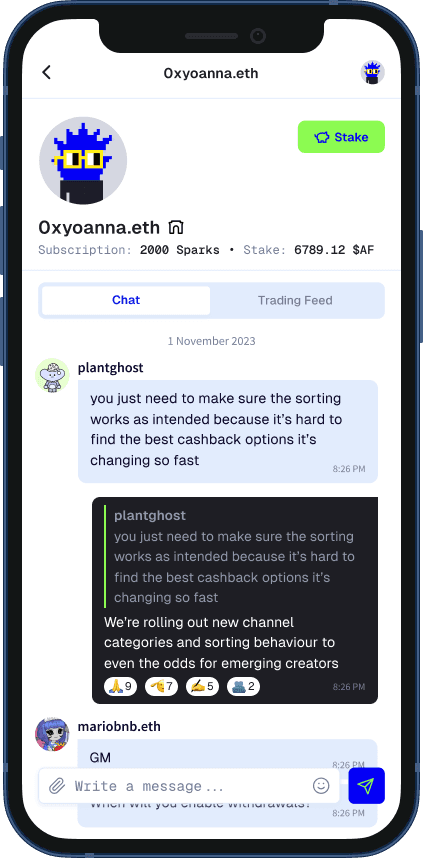
We launched AlfaFrens with unidirectional chats: creators saw all messages, but subscribers only saw the ones the creator publicly cited. What we worried might be too restrictive turned out to be one of the community's strongest likes, so we kept the mechanism to prevent spam and make chats feel curated instead of chaotic. - 02
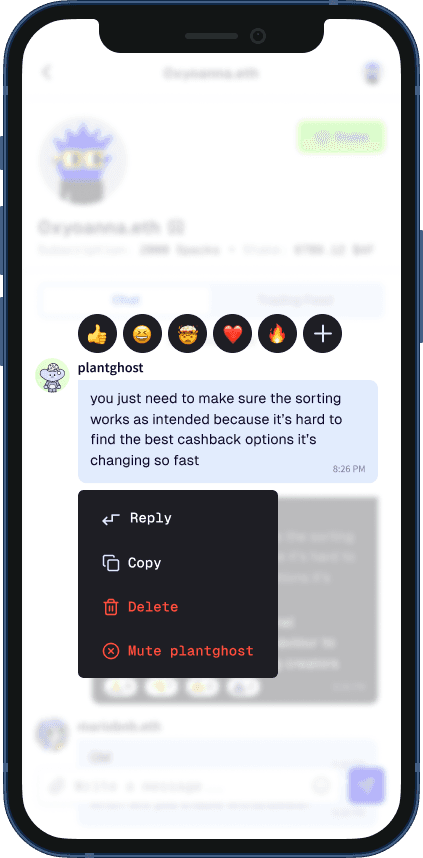
Reactions and mute
Both creators and subscribers wanted emoji reactions to make the chat feel alive. Mute gave creators control without having to ban. - 03
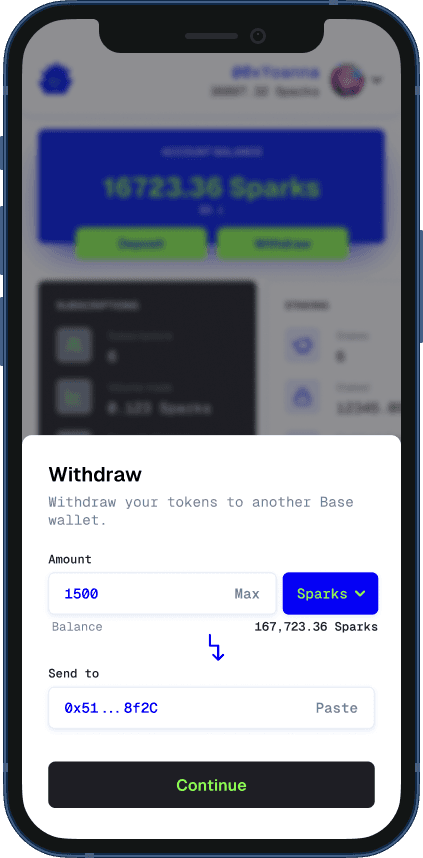
Withdrawals
Disabled in the first weeks, and users were fine with it (!). As the hype calmed down and more withdraw requests followed, we rolled the feature out so people could cash out earnings. - 04
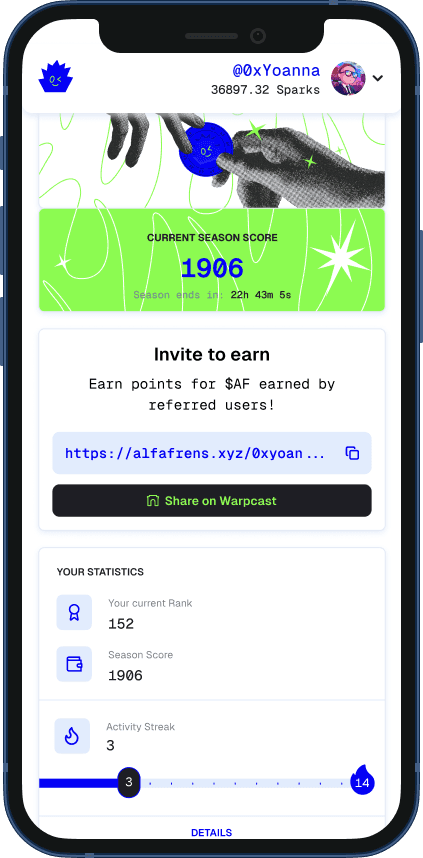
Additional rewards for invites
Active users could invite friends and earn an extra share of $AF tokens from their invitees' on-platform activity, turning every committed user into a distribution channel. - 05
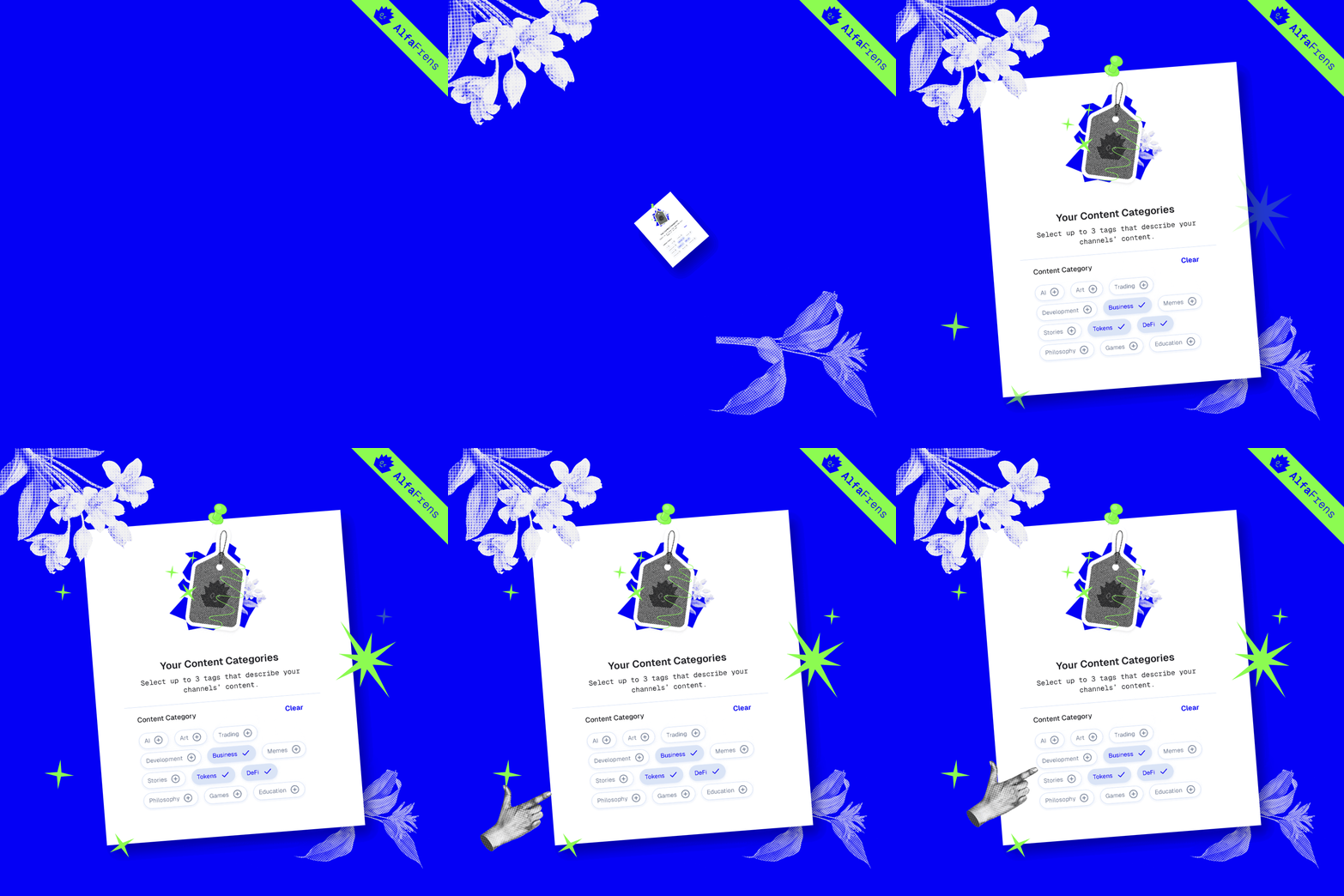
Channel categories
As the platform grew, channels were hard to navigate. We grouped them into categories so users could find what mattered to them without scrolling the whole directory. - 06
Migration from DEGEN to ETH
Gas spiked from our volume and DEGEN's volatility made costs unpredictable. We migrated the gas and subscription token from DEGEN to ETH for more stable economics. - 07
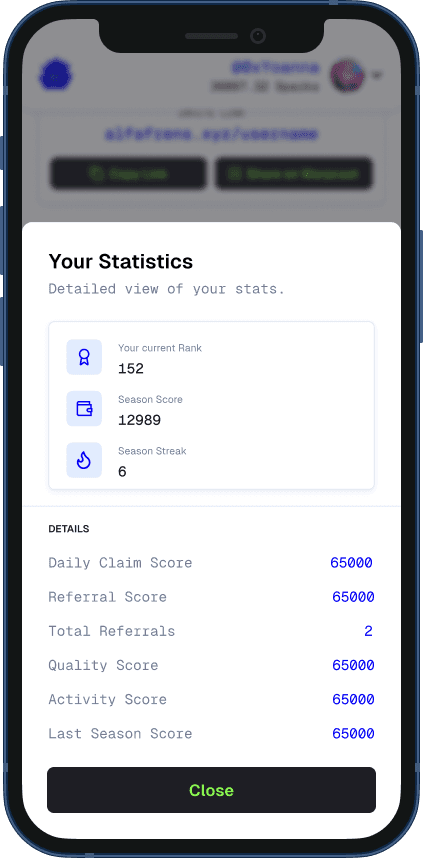
Quality and Activity score
We added a per-channel Quality and Activity score to keep the app from being flooded with low-quality content and engagement-farming speculators.

What we killed
- 01
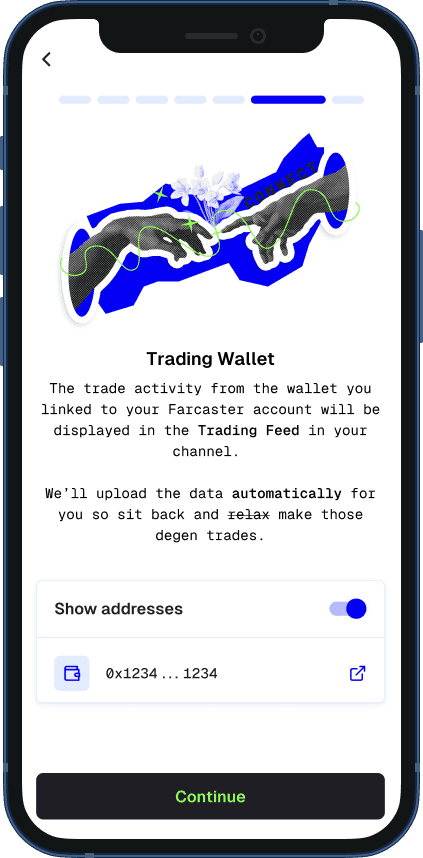
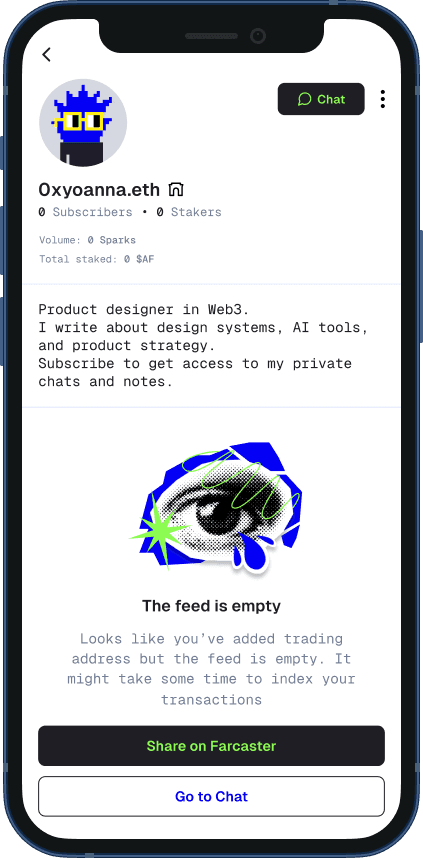
Trading Feed inside channels
We added it alongside chat access, hoping it would deepen engagement. Users were not interested at all. We pulled it.
What we wrestled with
- 01
Explore tab recommendation logic
Big channels grew bigger, small ones were impossible to find. We reworked the reward calculation to even the odds for emerging creators. - 02
AlfaFrens broke Base
Gas spiked from our volume. We had to scramble to optimise on the chain side and rework throughput before the network caught up with us.
Am I ugly?
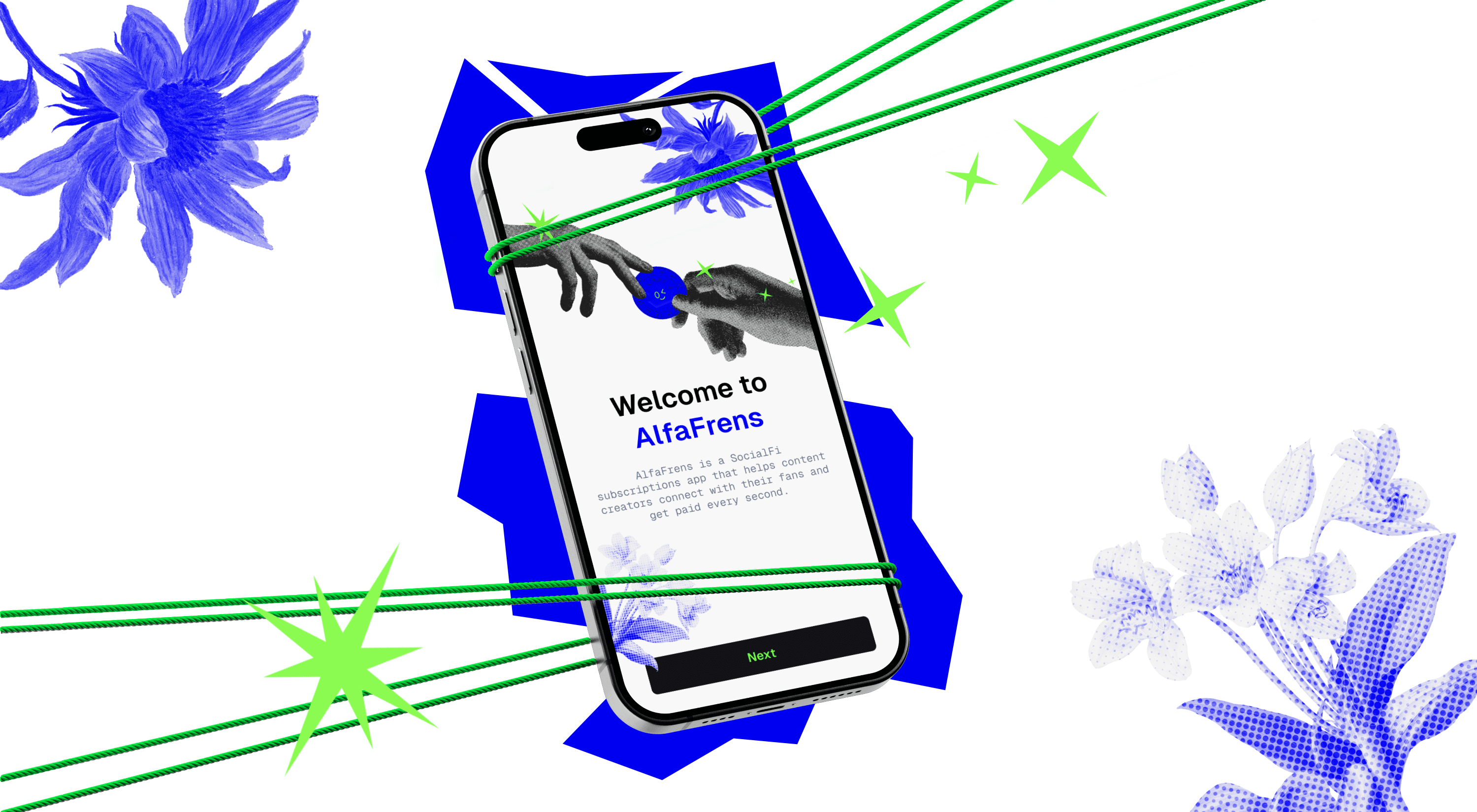
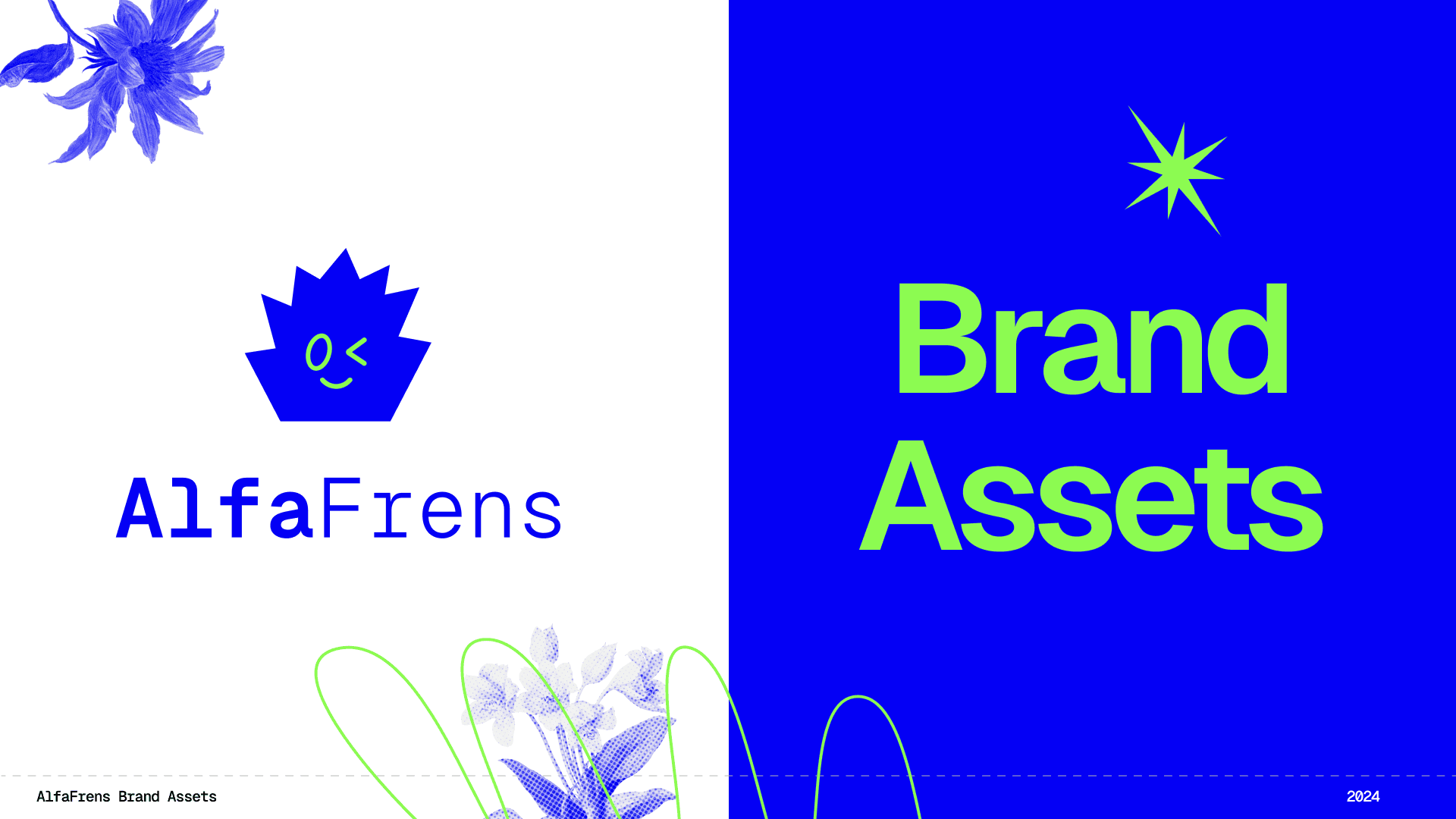
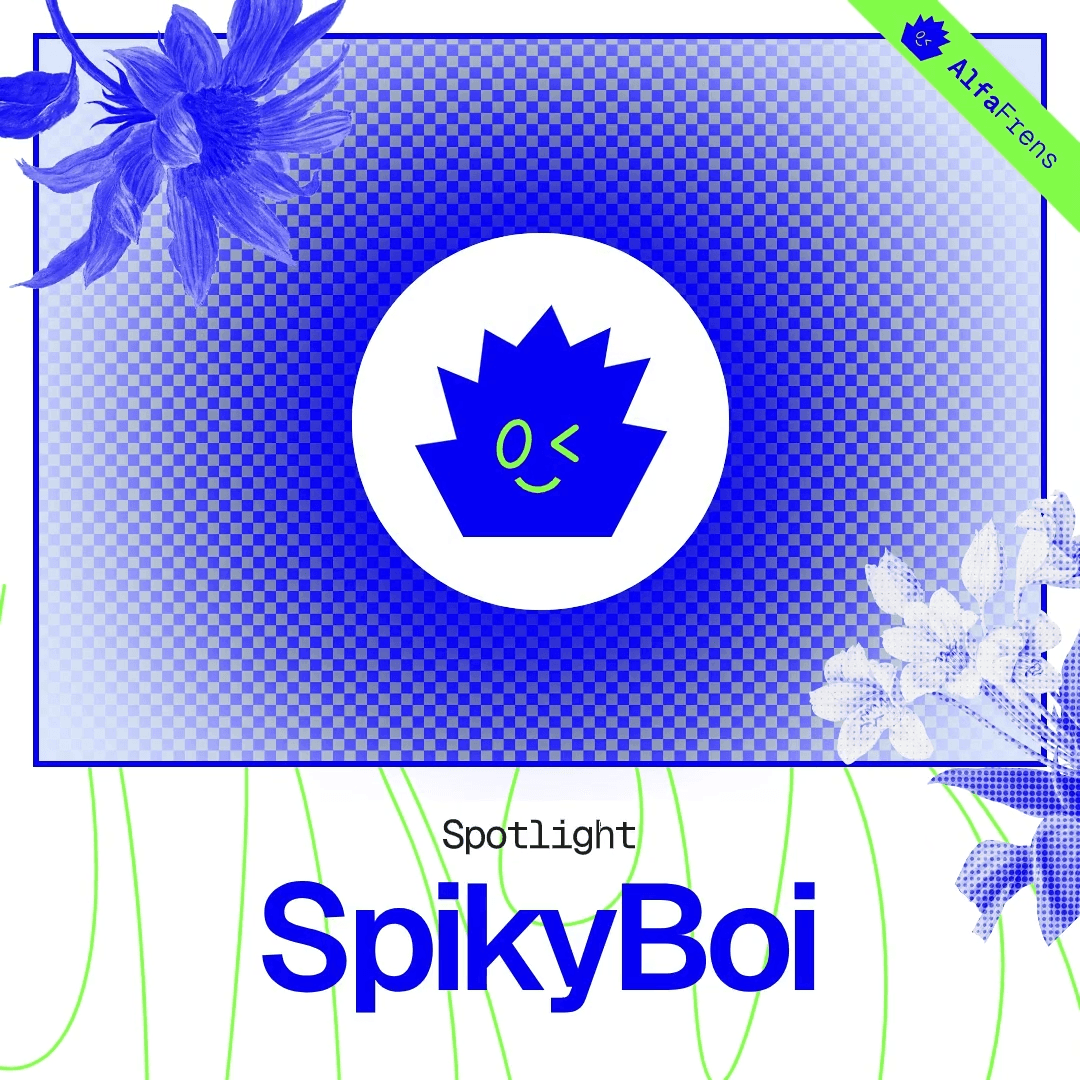
The mechanics and the strategy pushed me toward digital brutalism: bold colours, weird illustrations, collages. It was supposed to look fun and daring. I figured people would either love it or hate it. They loved it.
On top of that, designing an icon for a SocialFi app that could carry the vibe was a real challenge, but eventually SpikyBoi was born.





AlfaFrens was a crazy ride with a team of highly motivated professionals who found fun in the challenge and brought a new payment standard to SocialFi.
Superfluid streaming tech was put through its biggest consumer stress test to date. Around 38,000 new wallets were introduced to the Superfluid ecosystem in the process. SocialFi got a payment primitive that actually felt native to the medium.