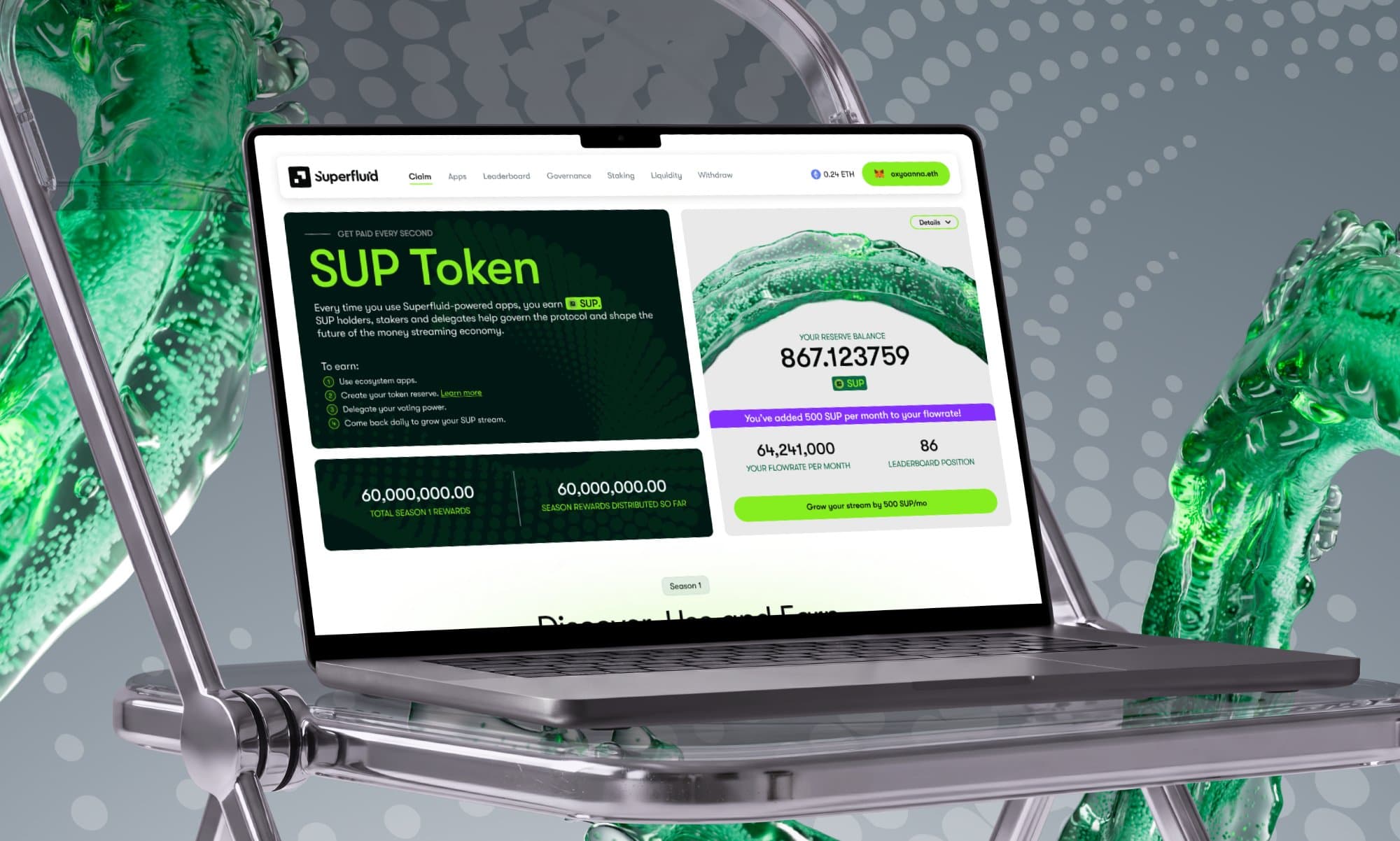
I led the design of the claim app end-to-end, owning information architecture, wireframes, and overall product experience. I worked closely with business and engineering teams to align on clear, practical solutions, making sure what we built was both feasible and easy to understand by all users no matter their level of experience.
Alongside the product work, I led the rebranding effort in collaboration with brand and 3D designers, defining a new visual direction for Superfluid. This resulted in a set of new 3D assets and animations, cleaner layouts, and a more polished, cohesive look that brought a much-needed refresh to the existing branding.
By 2025, Superfluid had grown from a tiny streaming-money experiment on Polygon and Gnosis into the underlying rails for grants, payroll, vesting, DeFi and social apps. By then it had grown to 350K wallets, 70K daily active users, and over $750M in volume across 11 networks. The protocol needed a token and SUP was the answer: an ecosystem token to incentivise app usage, reward builders, and govern the DAO.
I designed the claim app, the consumer surface where SUP gets distributed. It had to do four things: drive daily engagement, surface campaigns across the ecosystem, get holders to delegate voting power so the DAO stays active, and give people a single place to manage everything they earned.
Airdrops are obsolete.
Uniswap kicked off the golden age of airdrops, and a generation of airdrop farmers followed, but the cracks are hard to miss: most users do the bare minimum to qualify, then dump on day one. The token bleeds and the community never forms.
Points systems were the attempt to fix it, but they're dishonest by design. Users dedicate time and capital chasing rewards whose terms are undefined, inconsistent, or retroactively decided.
Streaming Programmatic Rewards (SPR) offer points-system flexibility, but the payout comes as a continuous stream instead of a one-time drop.
- 01
Take actions across the ecosystem
Vote, mint, provide liquidity, use ecosystem apps. Every action earns points which can be tracked on a transparent leaderboard.
- 02
Points convert to a streaming reward share
Each campaign has a pre-allocated SUP budget. Each user's points become their slice of that stream.
- 03
Rewards land in the user's Reserve
Tokens arrive in the user's own on-chain Reserve, second by second, as they keep participating.
- 04
Users choose their time preference at withdrawal
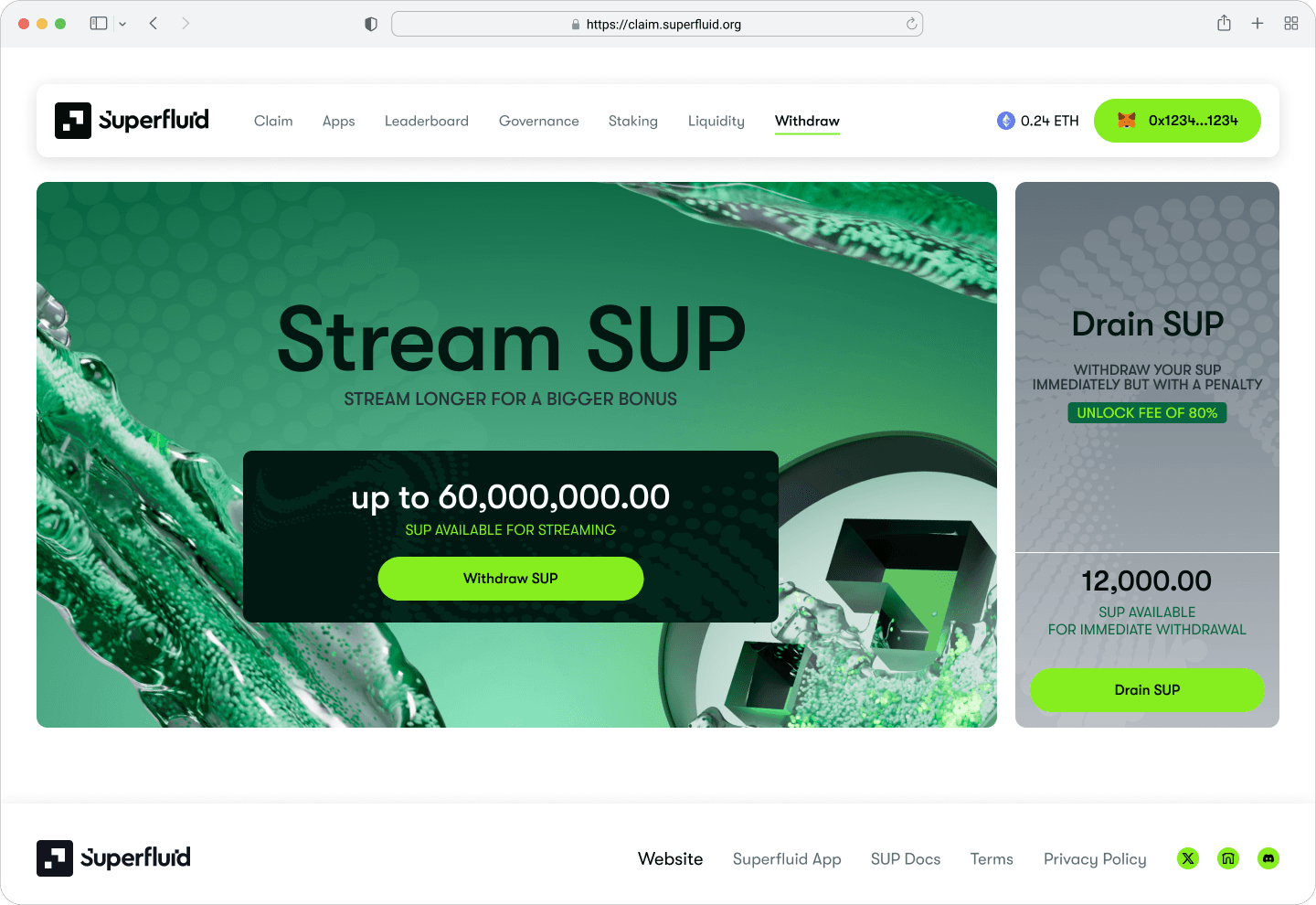
Patience is paid. Impatience is taxed. Users who drain their Reserve pay an 80% fee, which gets distributed back to the community.
The user picks their own strategy.
A Reserve is a smart contract that holds each user's rewards. It segments the audience into three groups based on what they do at withdrawal time:
Short-term sellers
Want it now. They can drain instantly, but only walk away with a fraction of their allocation.
Patient holders
Receive the full amount, streamed over a defined period.
Long-term stakers
Get a bonus on top of the base allocation, paid for by the penalty short-term sellers take.
Farmers aren't villains in this model. They self-select into the segment that matches their behaviour, and the economics balance out. Loyalty is rewarded. Speculation funds the rewards.
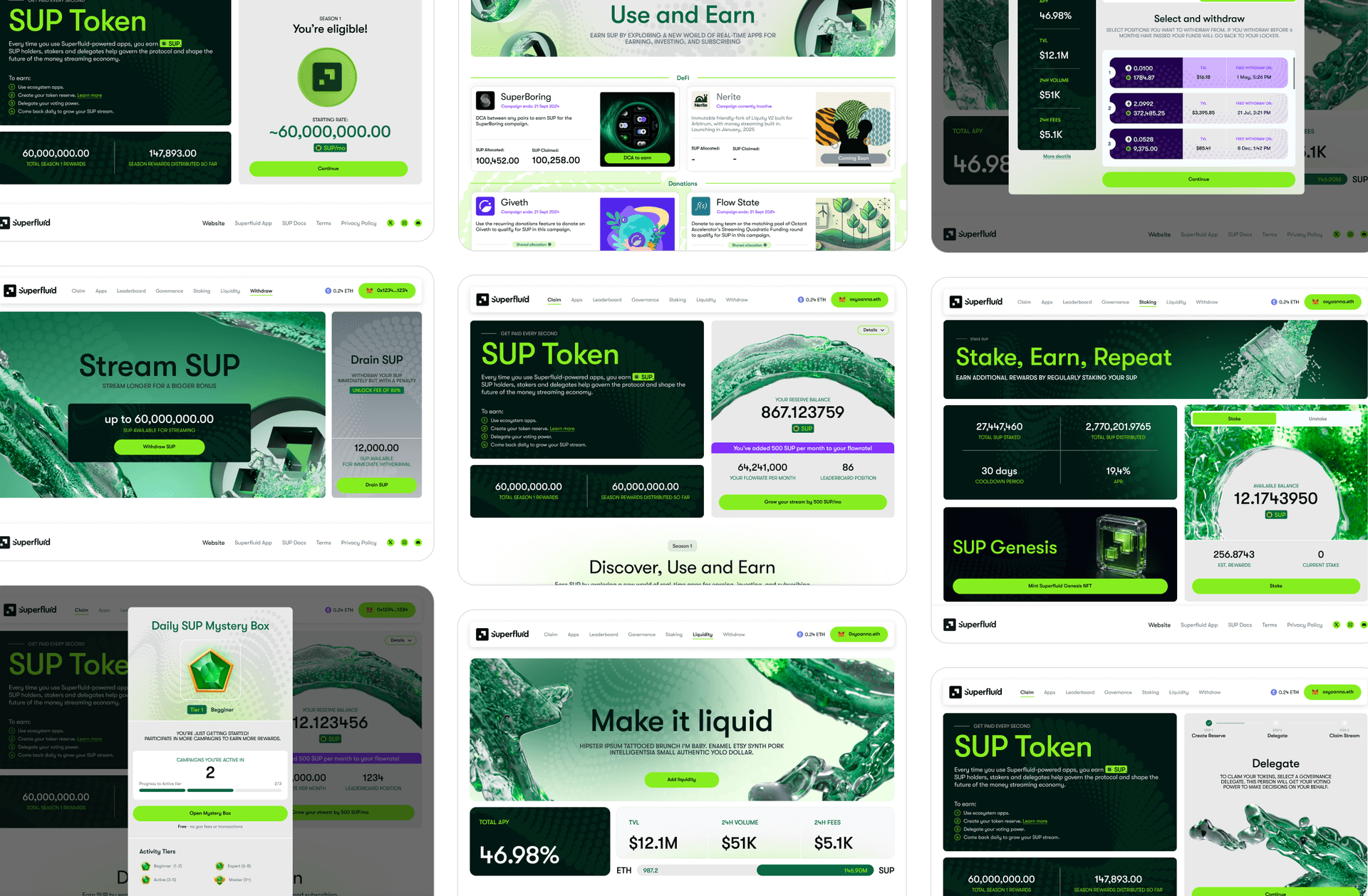
The claim app had to be the one place users come back to daily. Everything related to SUP lives here.
The core jobs the app had to do:
- 01
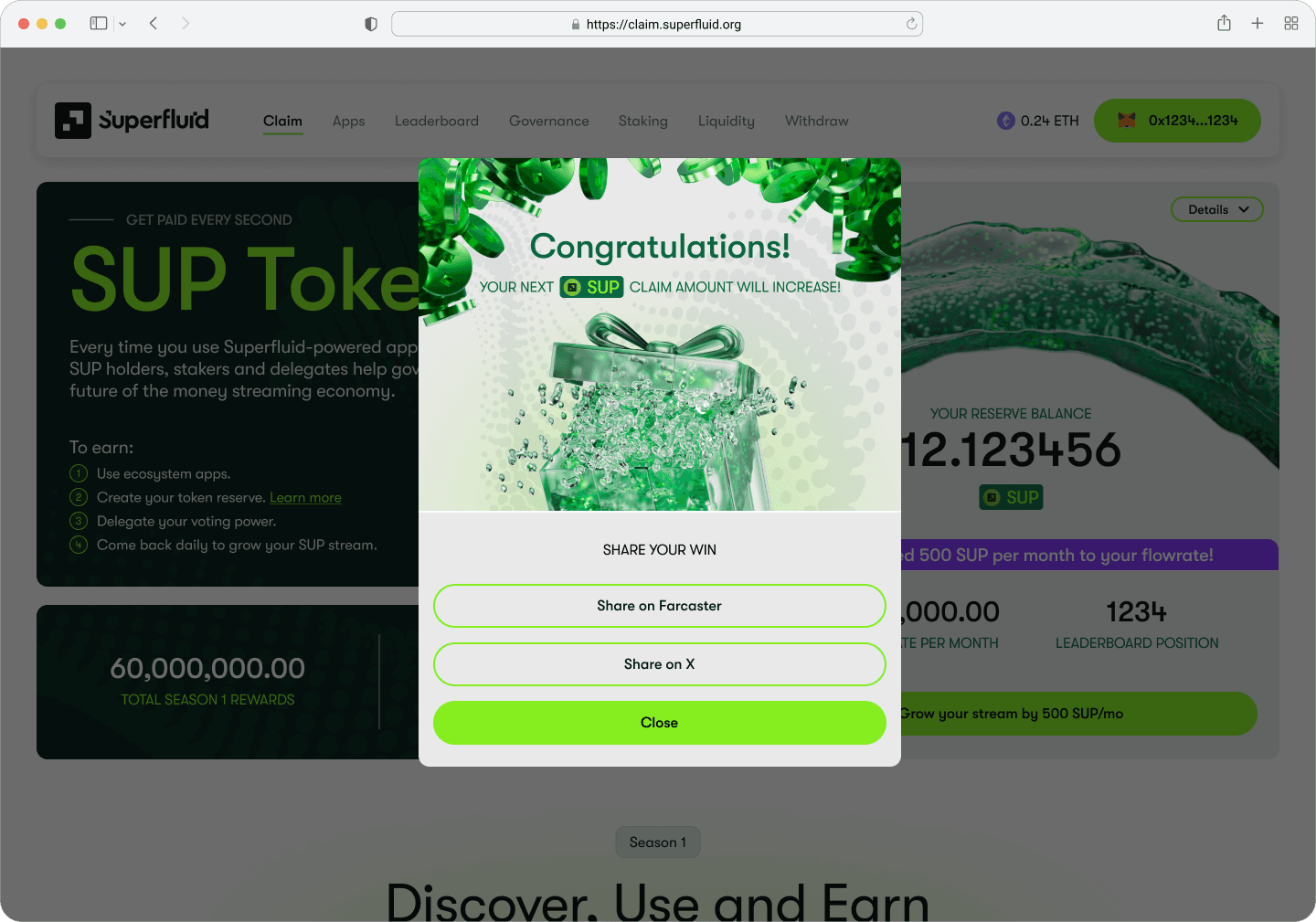
Daily claim
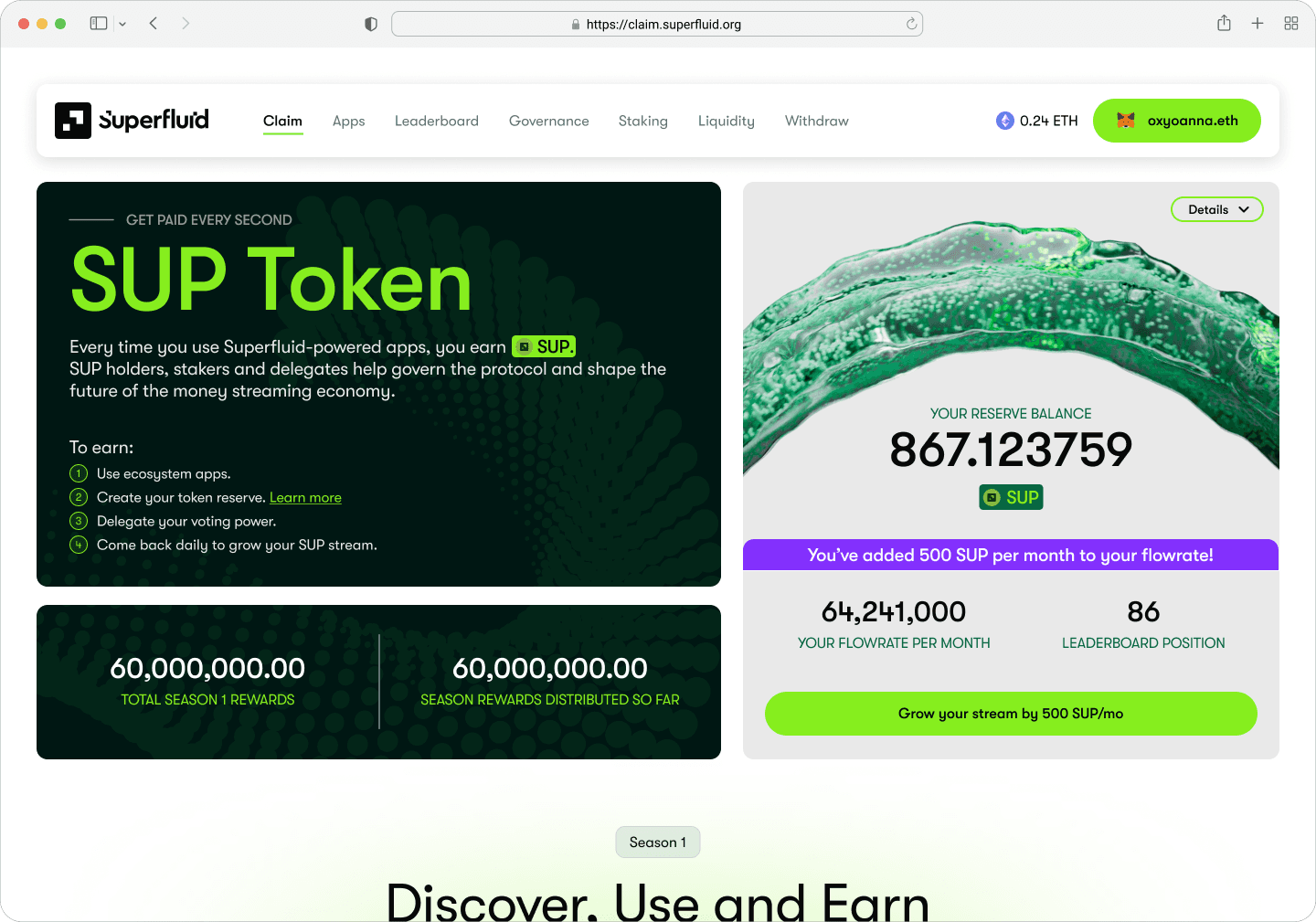
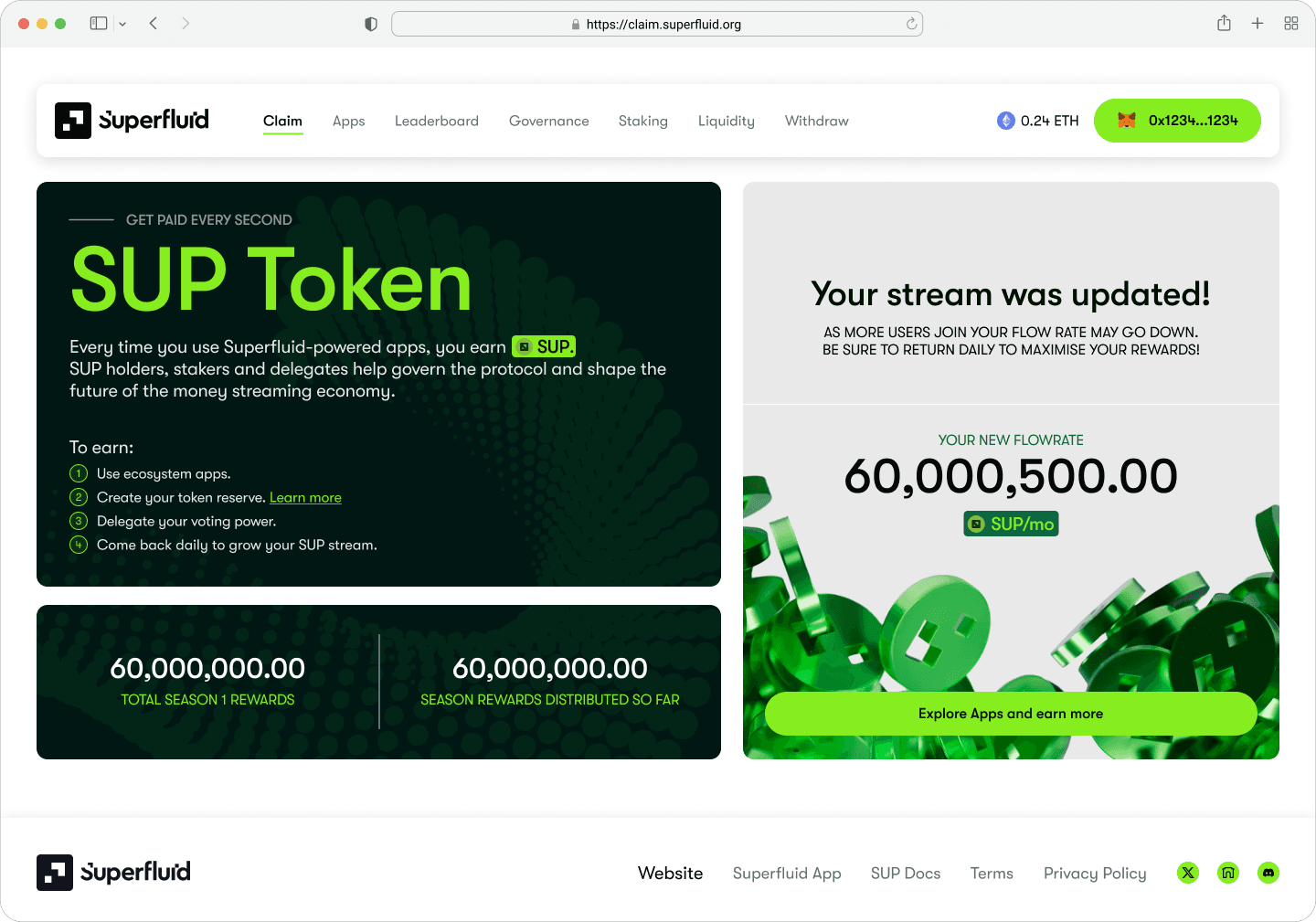
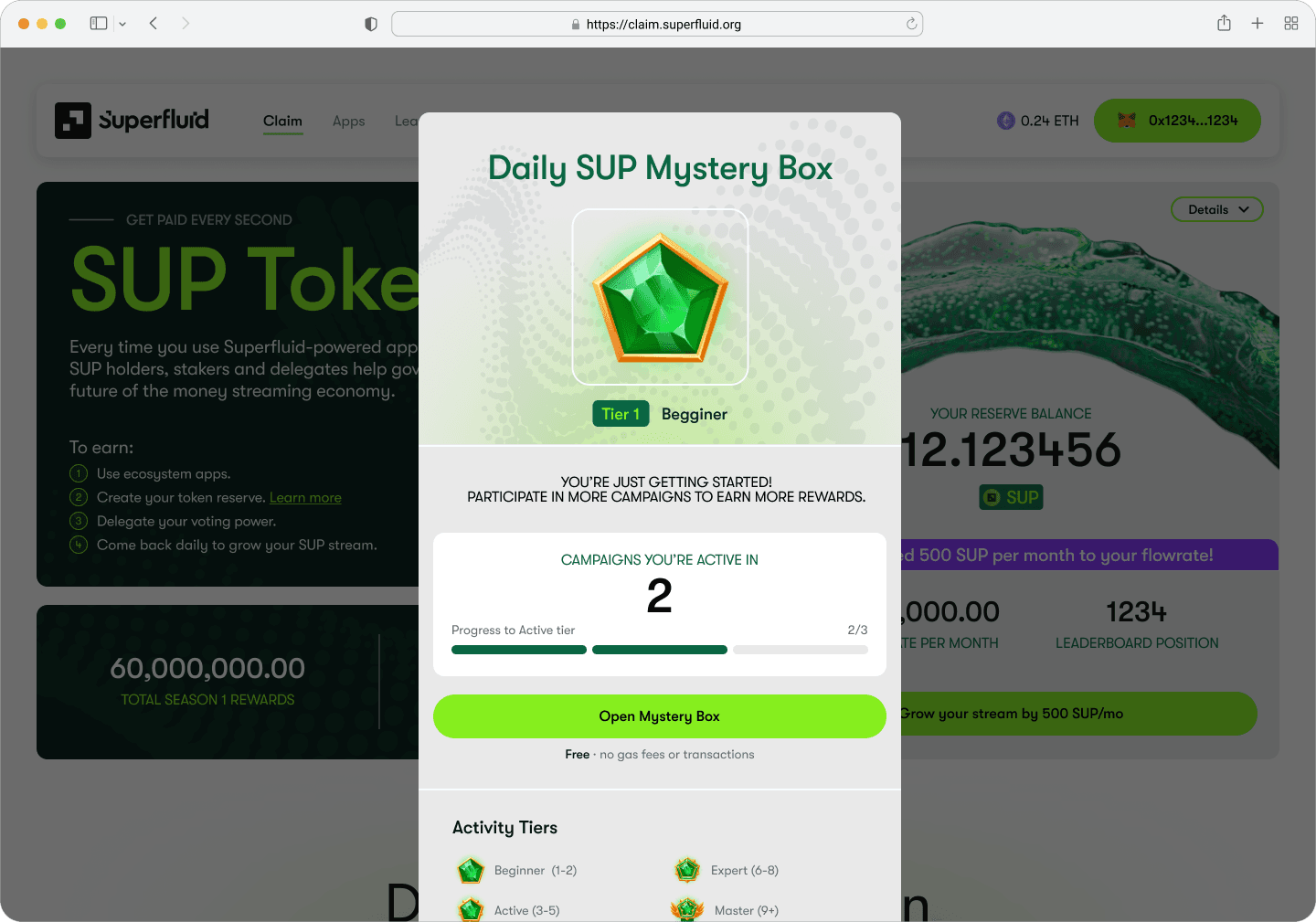
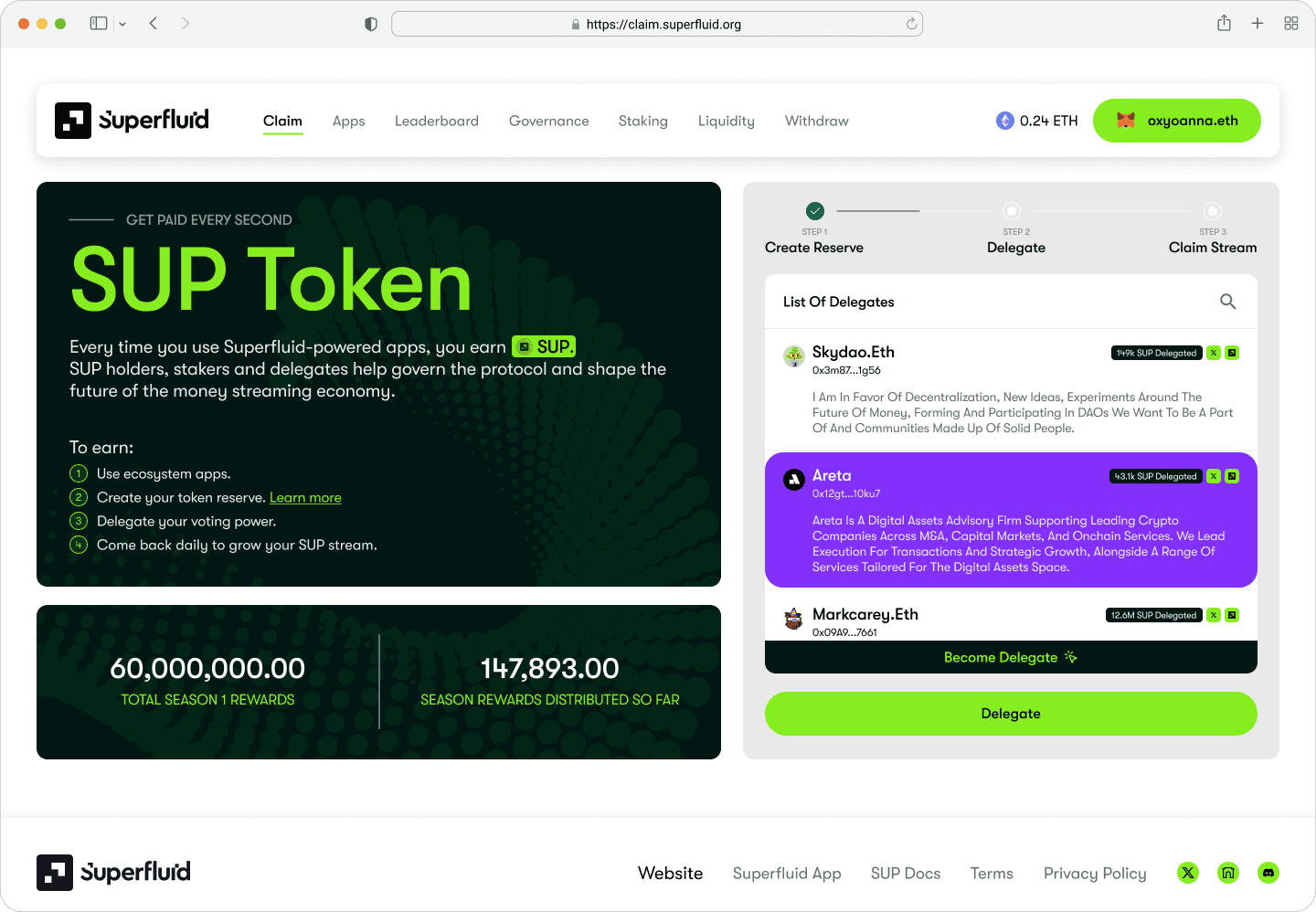
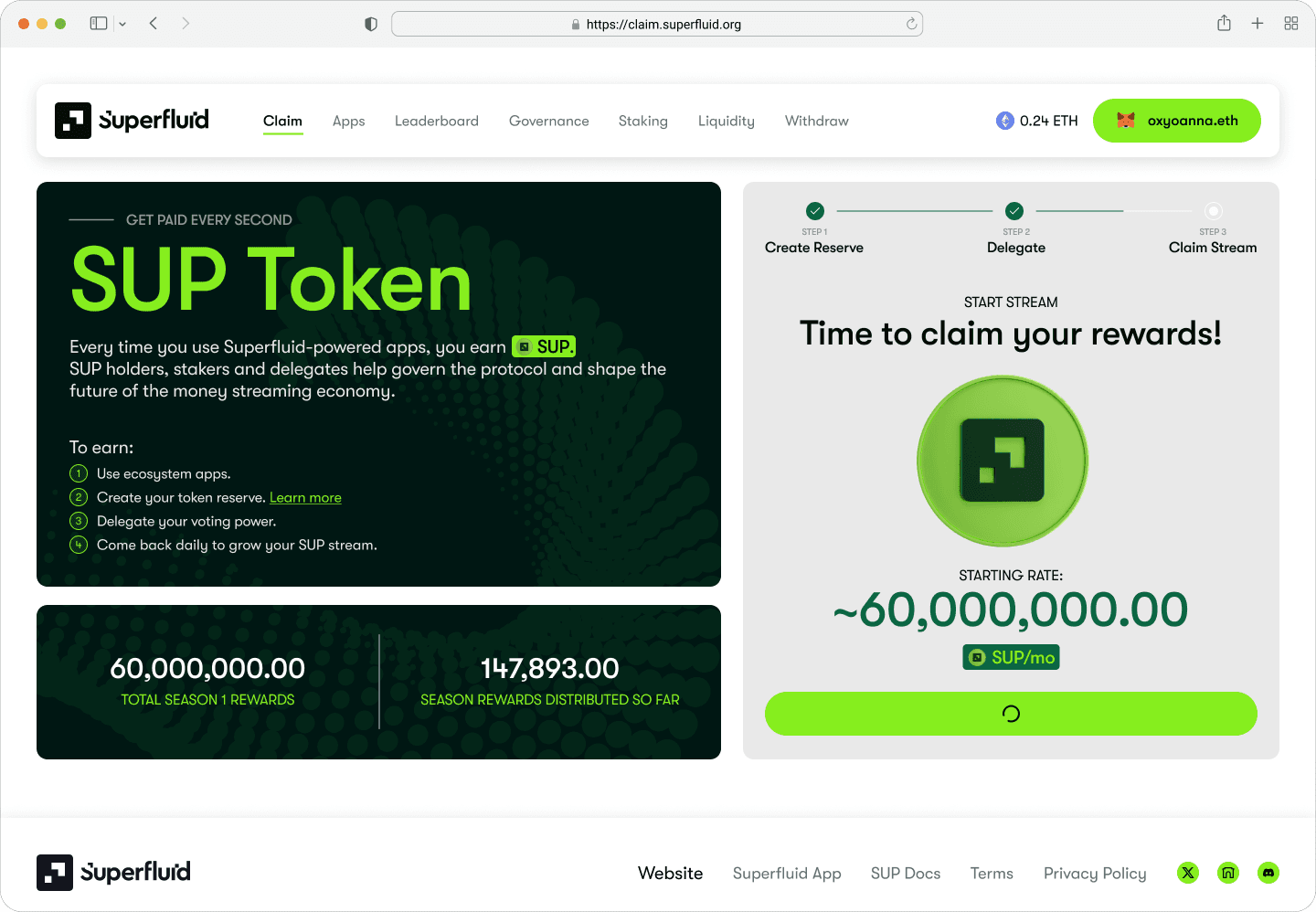
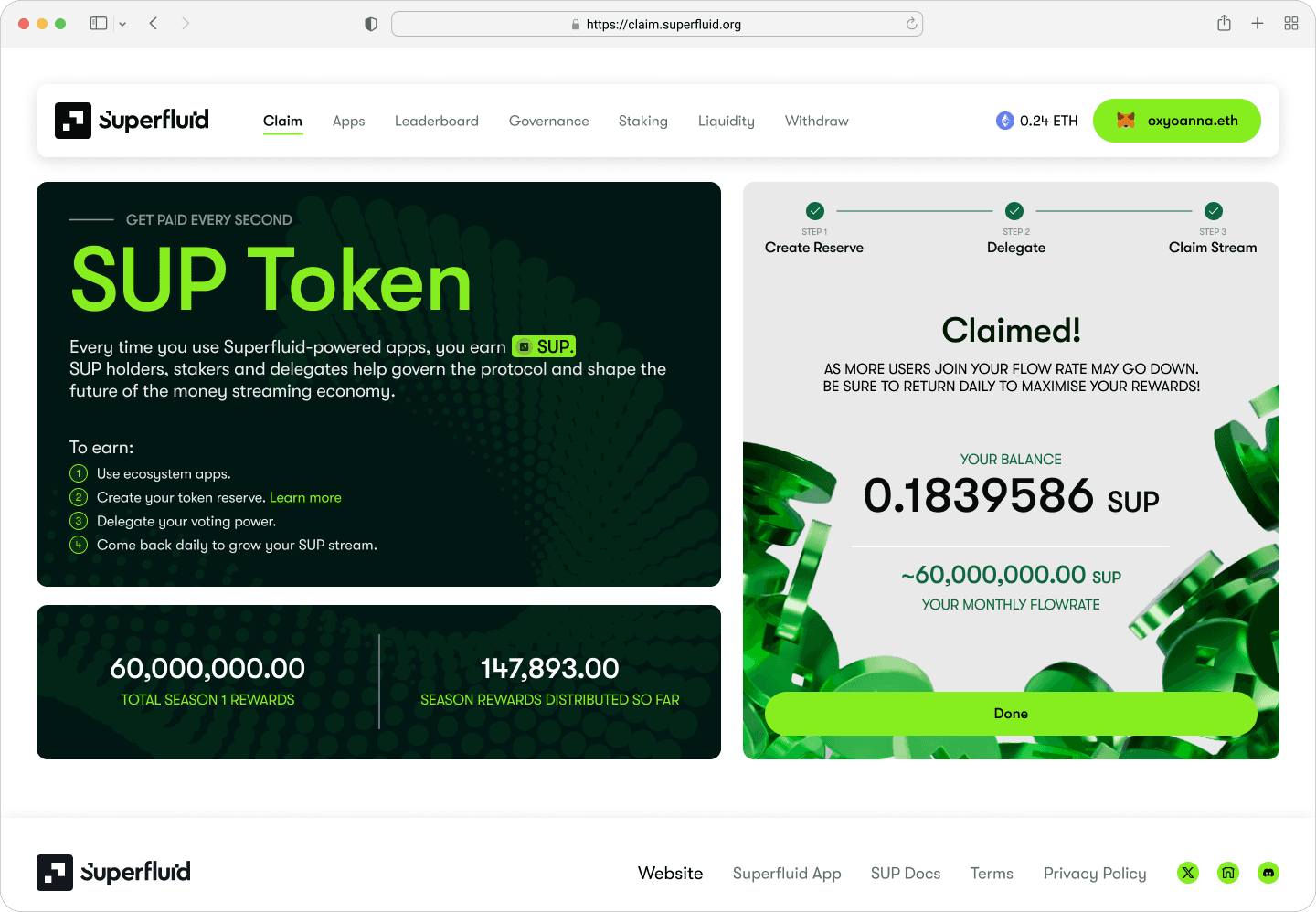
Users log in once a day, see how much SUP their participation has earned, and claim it into their Reserve. The daily habit is the point, since active claimers naturally dilute idle ones.
- 02
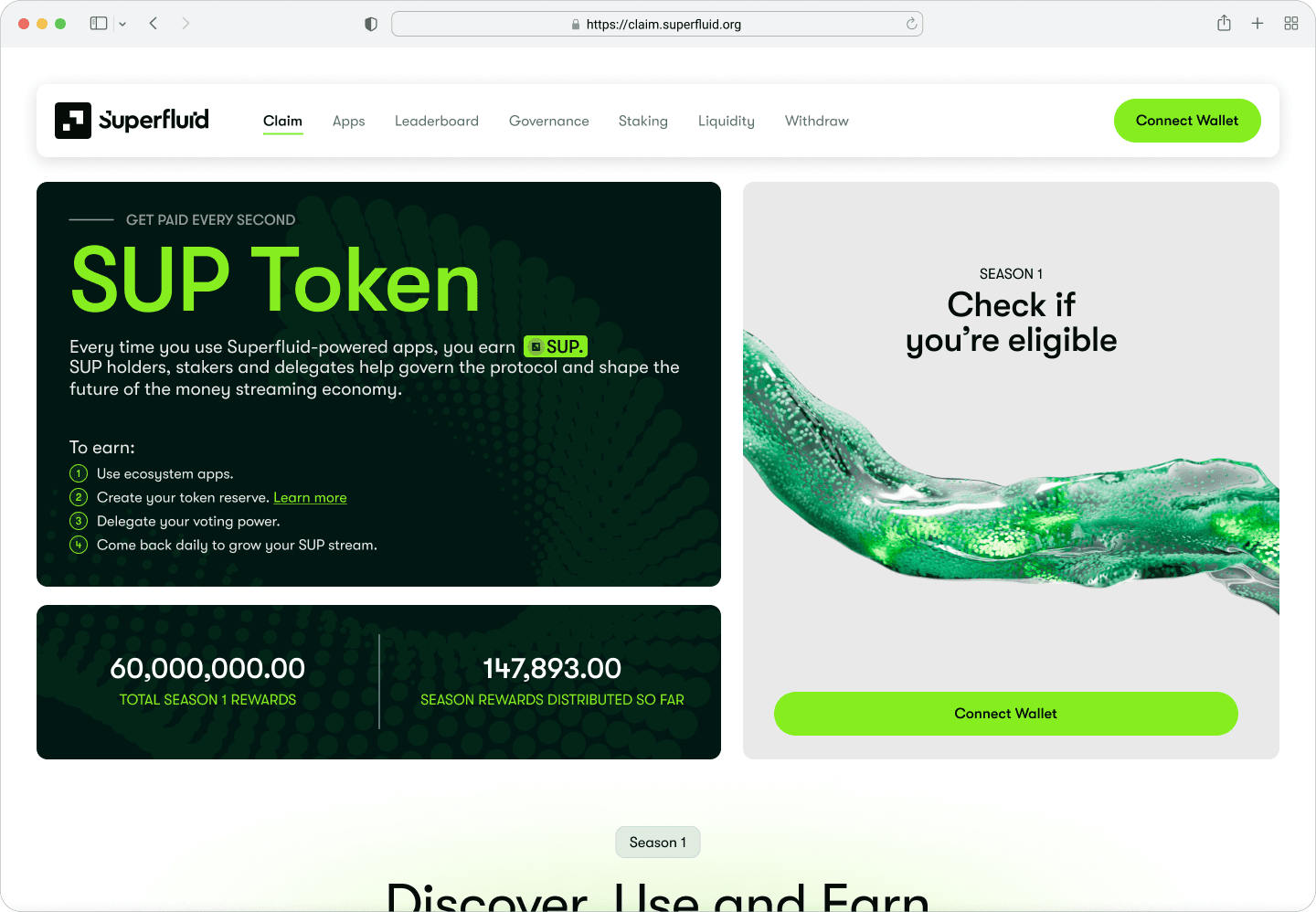
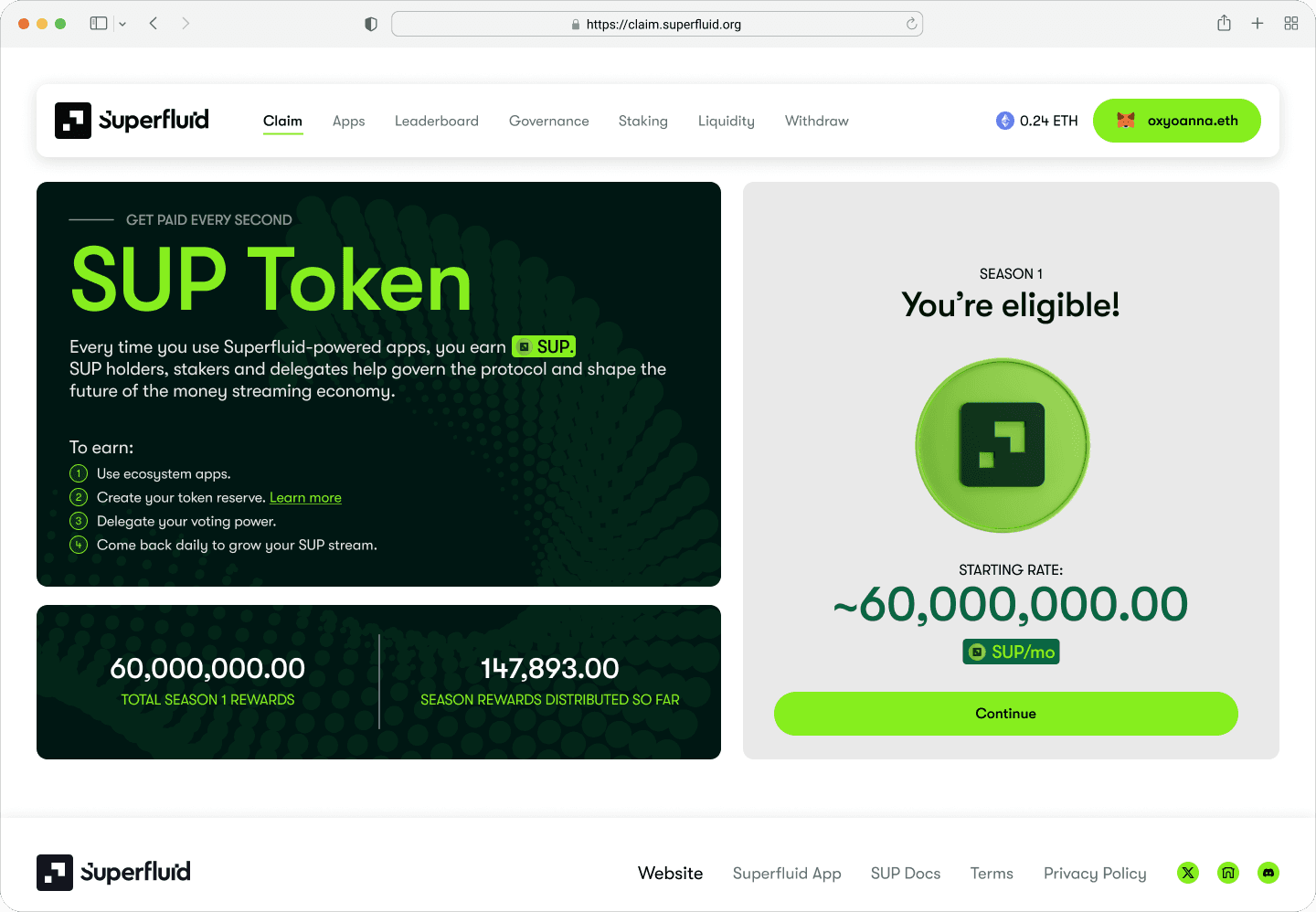
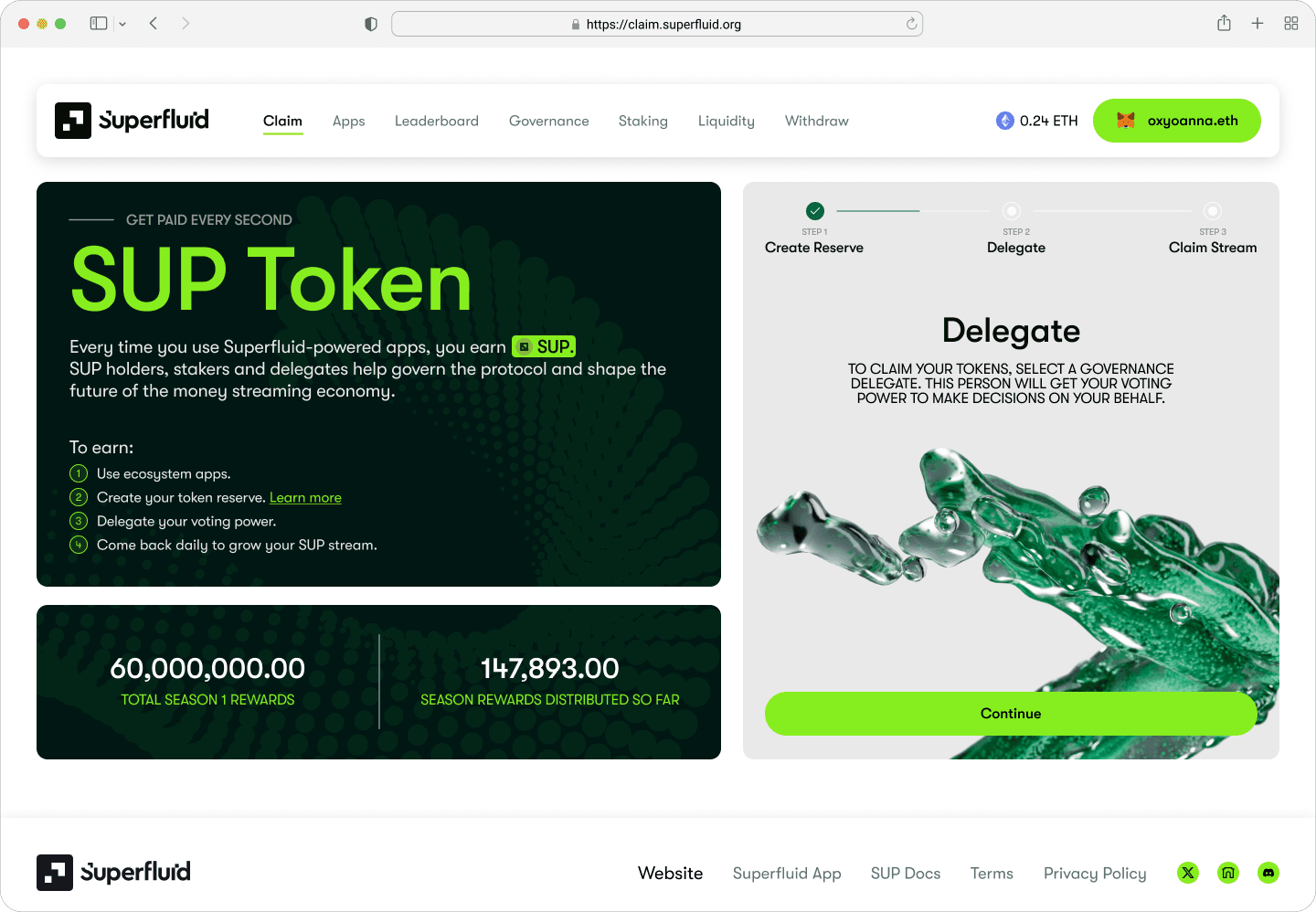
Onboarding & governance
First-time eligible users create a Reserve and delegate their voting power in the same flow. We wanted to force this step early, because without active delegation the DAO stalls.
- 03
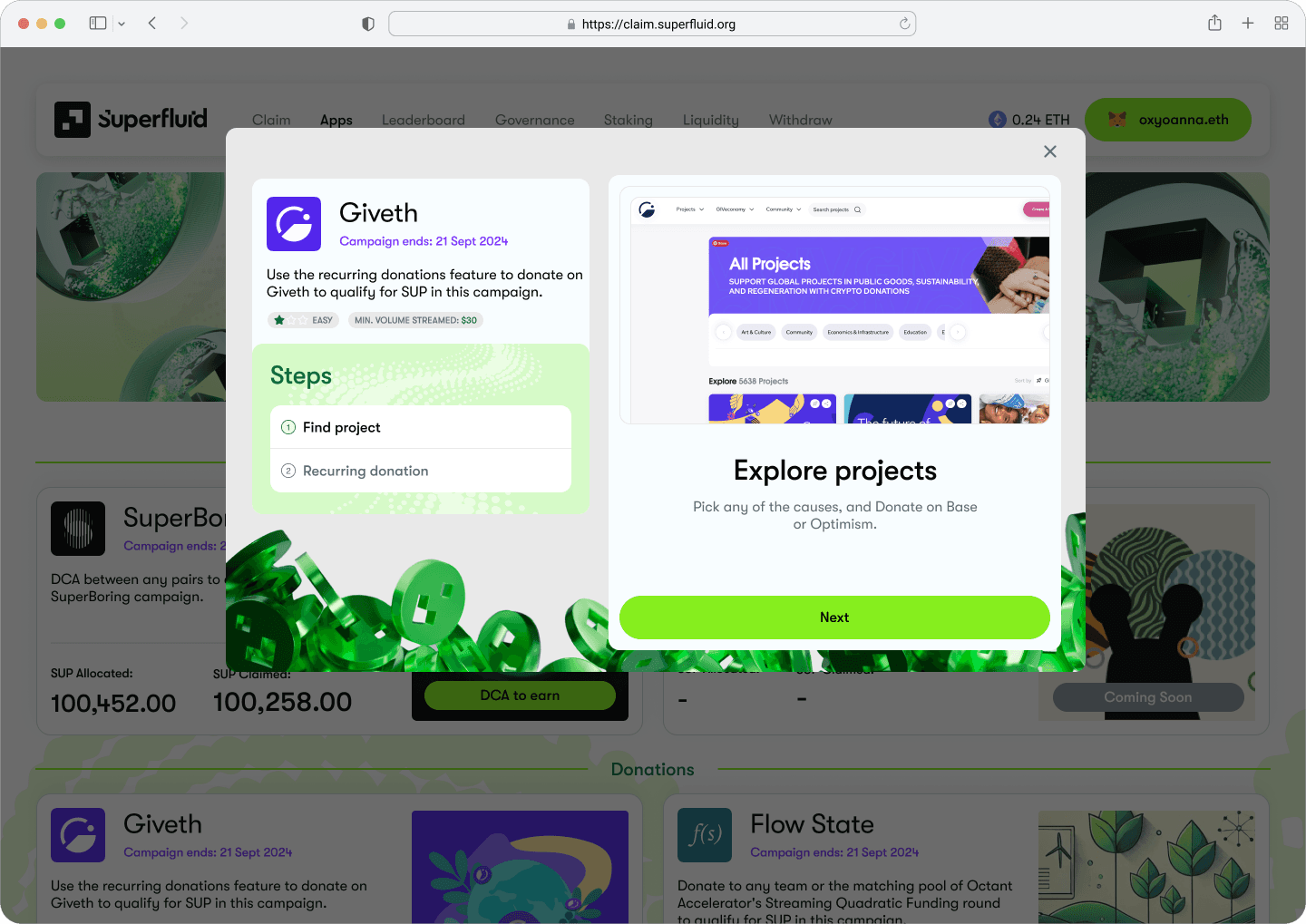
Campaigns
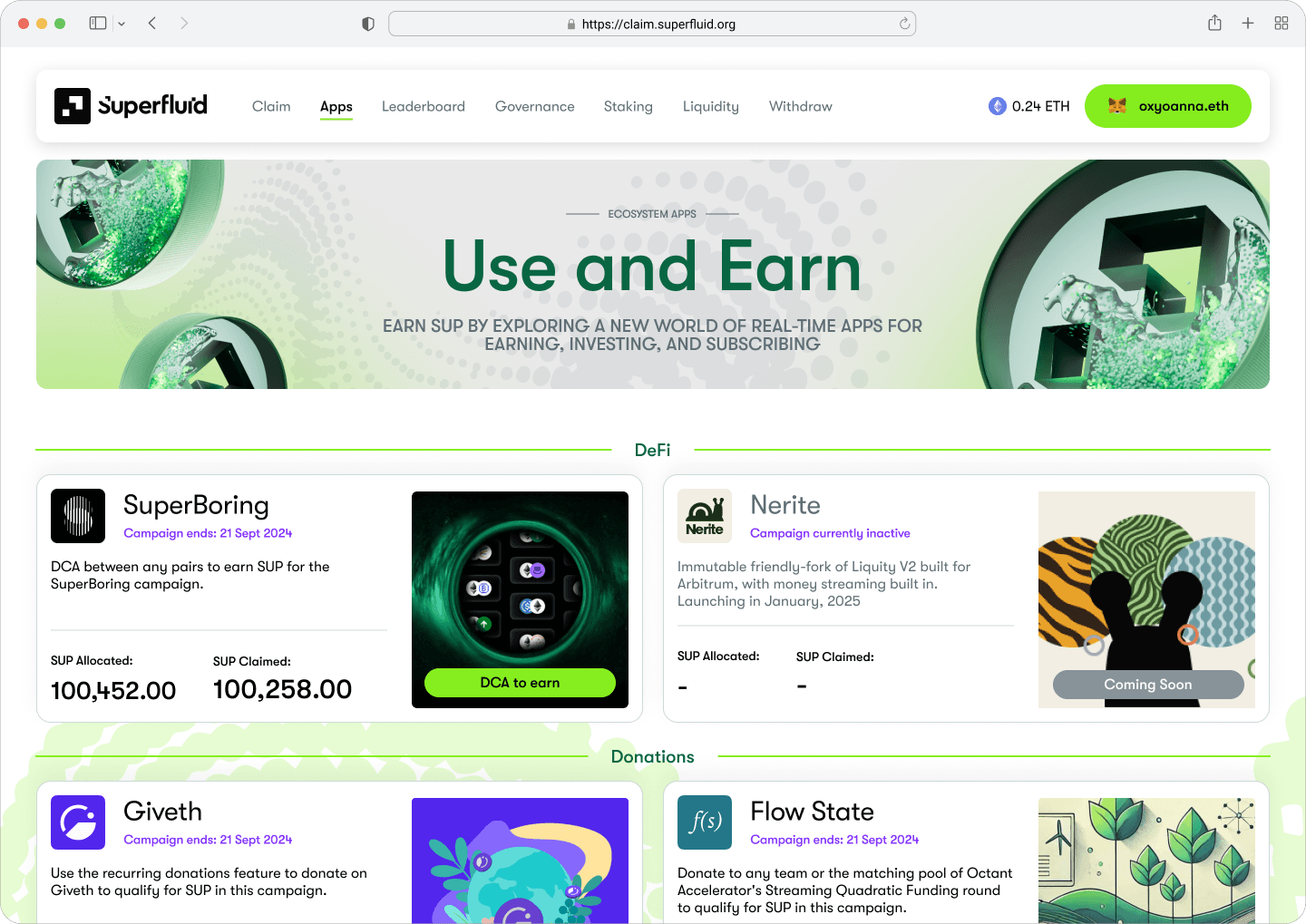
Every season has a roster of campaigns across ecosystem apps. The claim app is where users discover them, see the allocated SUP budget, and track their earnings per campaign.
- 04
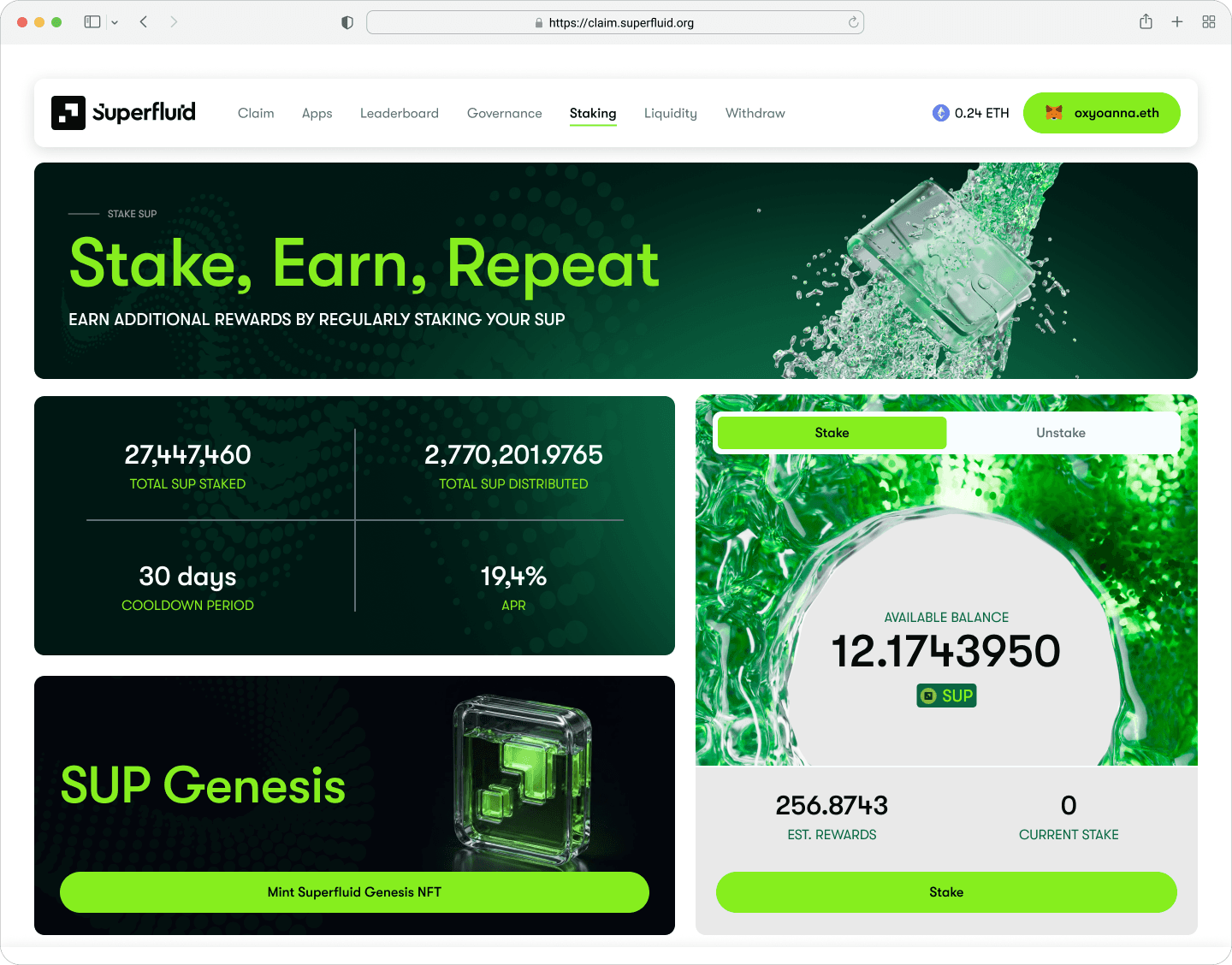
Staking
Stake SUP for longer to earn more. A simple staking / unstaking feature known by every DeFi user.
- 05
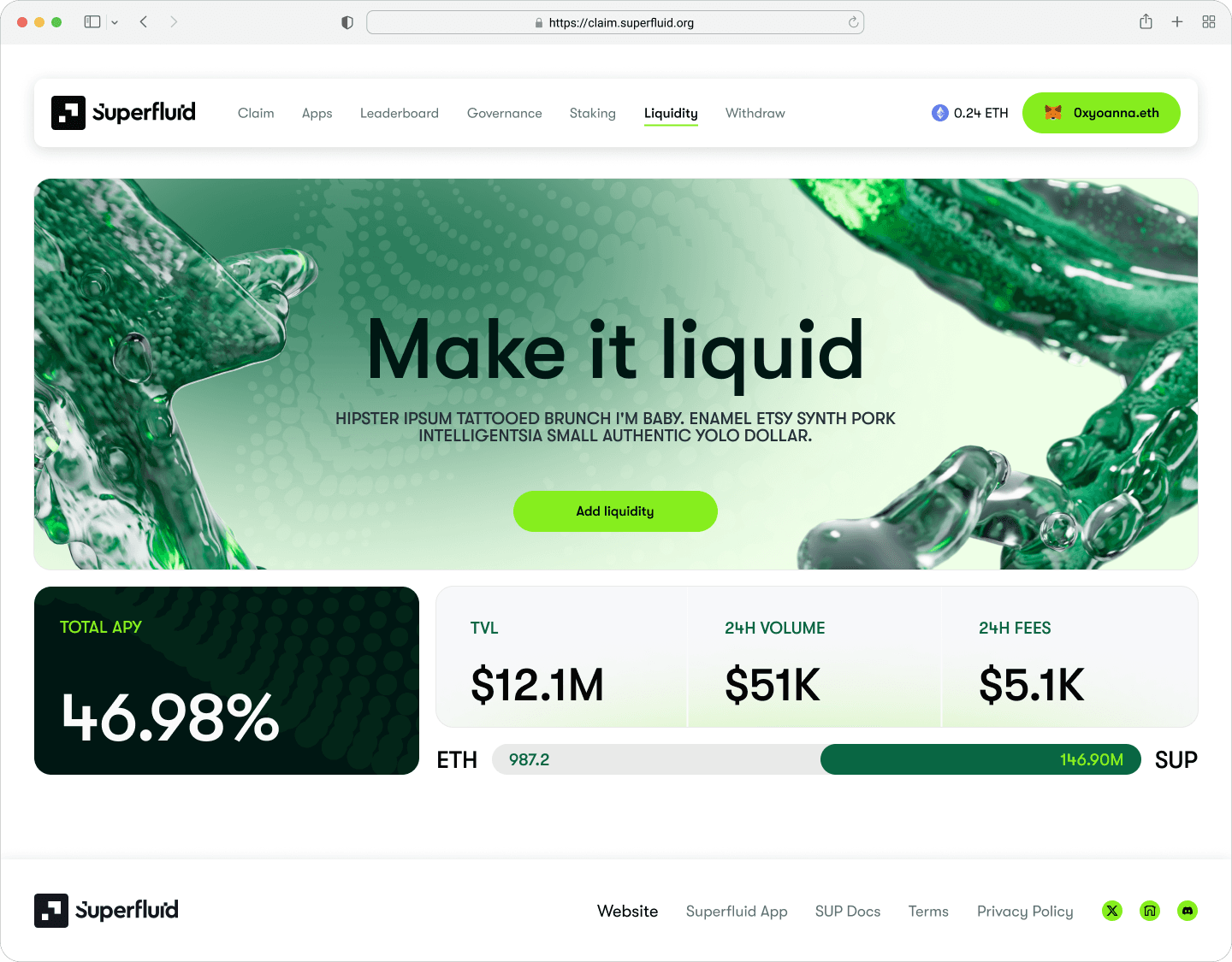
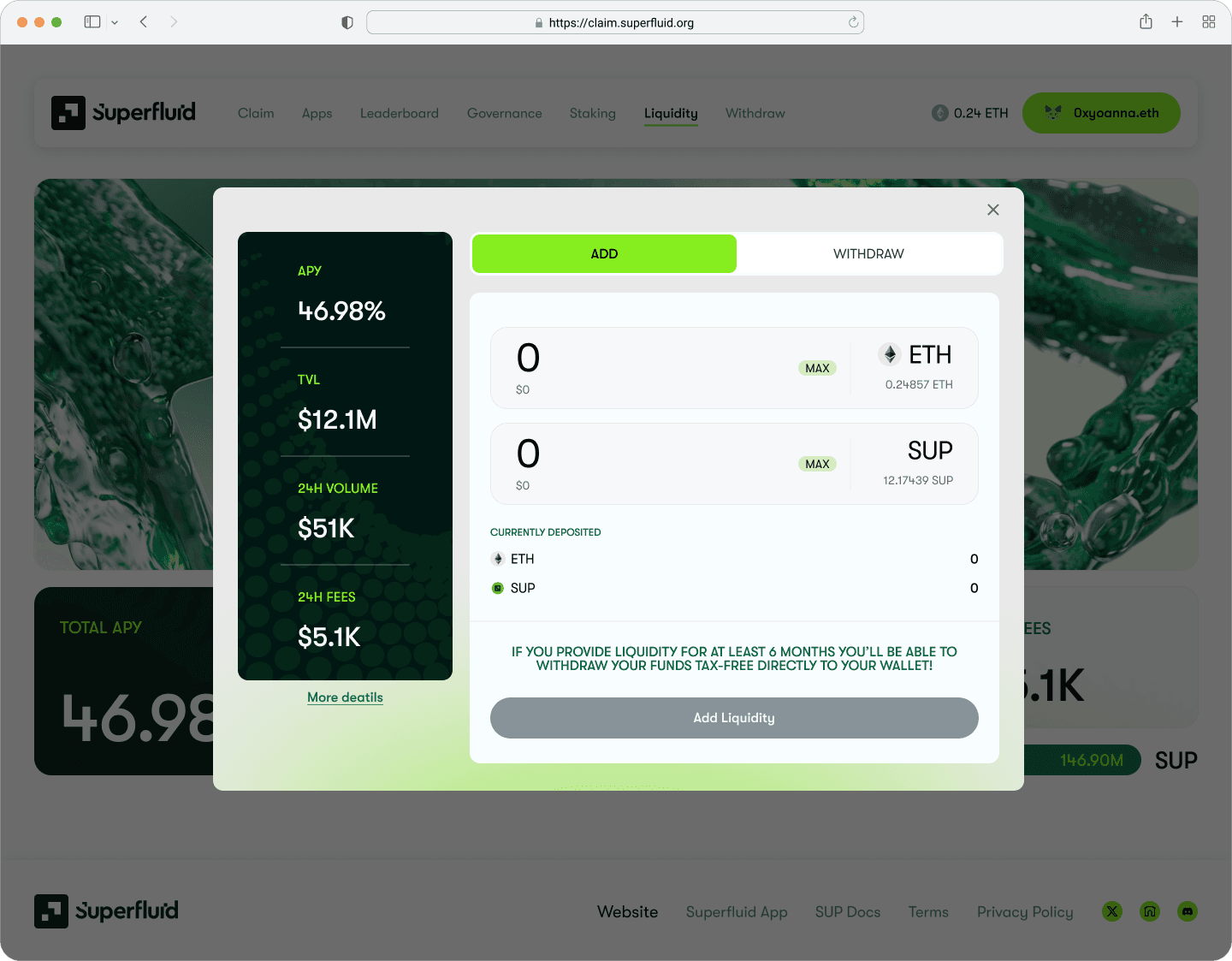
Liquidity provision
Every token needs liquidity, so Liquidity Providers get extra SUP rewards.
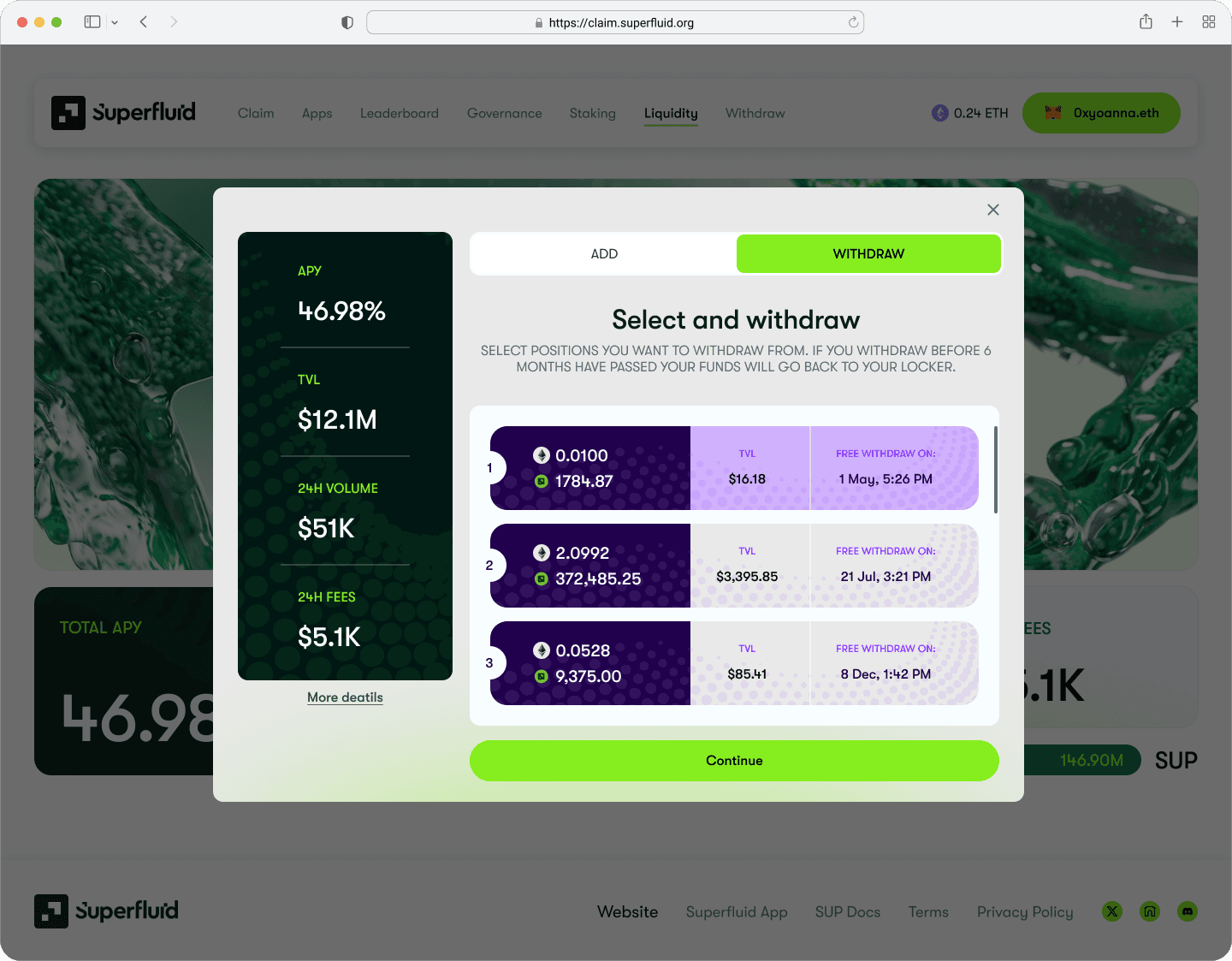
Three exits out of Reserve.
Withdraw is the moment where the whole reward philosophy gets tested. The interface gives the user a single comparative view of three paths so the trade-off is unmistakable:
- 01
Full stream over 18 months
Default. The user receives 100% of their SUP, streamed second by second over 18 months. Nothing lost. - 02
Shortened stream
When the user shortens the window, the amount they receive drops proportionally. The user picks the trade-off live, with the delta updating in real time. - 03
Instant drain
The user takes it all now and forfeits 80% of their Reserve. The forfeited tokens flow back to the community pool, fuelling the next season's rewards.
Making the consequence of each choice impossible to miss was one of the most important interactions in the app. Numbers update side-by-side, the penalty surfaces in plain language, and the community-pool destination is visible, so the user understands exactly what they're funding when they drain.
The claim app became the daily front door to the Superfluid ecosystem. Claiming, governance, staking and campaign discovery now live together in a single place, instead of being scattered across dapps and Discord channels.
The token works the way it was designed to: rewards people who keep showing up, the loudest farmers either commit or fund the next cohort by draining, and the DAO stays active because delegation is built into onboarding.
As Staff Product Designer on the Superfluid team, I co-owned product strategy for Superfluid Foundation, bridged it with the technical constraints, and translated all of it into an easy-to-navigate app for end users.
Token distribution systems are tricky. We had to juggle what's best for the business with what's best for the user in the long term. We believed in the strength of an engaged community, so instead of taking the easy path and doing a classic airdrop, we wanted to build a system that would last for years and reward those who truly deserve it.
I worked closely with the founders, Product Manager and developers to make sure every expectation and possibility stayed aligned across the team.